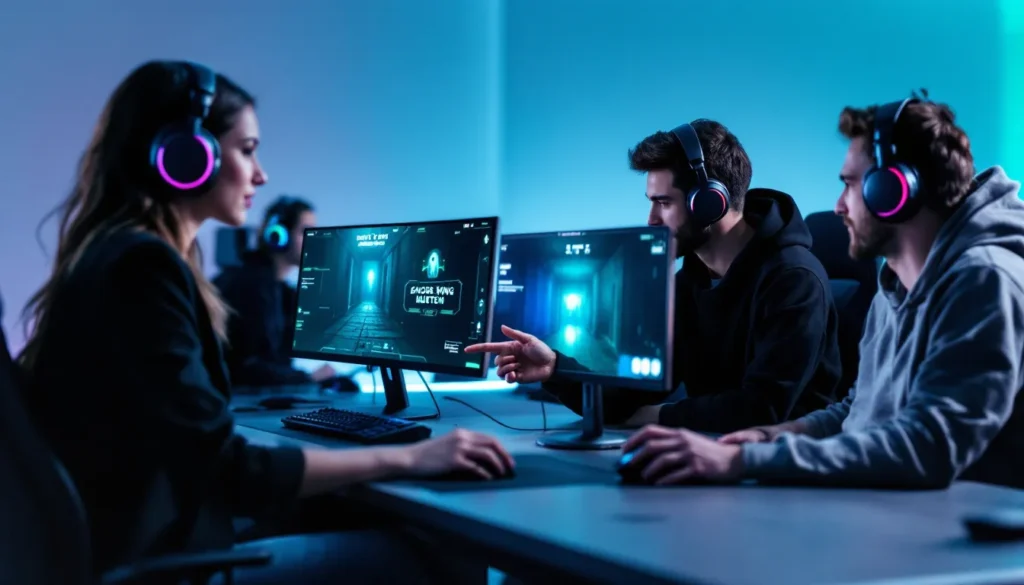
There’s something uniquely terrifying about hearing your friend’s voice crack over comms as something stalks them through a dark hallway. Multiplayer horror games tap into a different kind of fear, one that combines genuine scares with the shared vulnerability of your squad. And the best part? You don’t need to drop sixty bucks to experience it.
Steam’s library of free multiplayer horror games has exploded in 2026, offering everything from ghost-hunting co-op sessions to brutal asymmetrical showdowns where one player becomes the monster. Whether you’re looking for free multiplayer horror games on steam to play with your regular crew or testing the waters before committing to paid titles, the selection has never been stronger. This guide breaks down the top picks, what makes them worth your time, and how to squeeze every drop of terror out of them without spending a cent.
Table of Contents
ToggleKey Takeaways
- Multiplayer horror games amplify fear through shared vulnerability and unpredictability, making the experience more psychologically intense than solo play because your friends’ panic becomes contagious and you’re responsible for the squad’s survival.
- Steam’s library of free multiplayer horror games in 2026 includes standout titles like Midnight Ghost Hunt, Deceit 2, Unfortunate Spacemen, and No More Room in Hell that rival premium offerings in mechanics, atmosphere, and content depth.
- Effective communication, resource management, and role assignment are critical skills in multiplayer horror games—callouts must be specific, sprint economy matters, and the buddy system keeps teams coordinated under pressure.
- Avoid shovelware by checking concurrent player counts on SteamDB, prioritizing games with recent updates and active developer engagement, and using curator lists and user collections to surface quality titles buried under Steam’s inconsistent curation.
- Free horror games monetize through cosmetics rather than pay-to-win mechanics, making them genuinely competitive with paid titles if you’re comfortable ignoring battle passes and cosmetic FOMO tactics.
- High-quality free multiplayer horror games like Deceit 2 and Unfortunate Spacemen deliver hundreds of hours of content, strategic depth, and genuine scares—making them excellent starting points before investing in premium horror experiences.
Why Multiplayer Horror Games Are More Terrifying with Friends
Solo horror hits differently, it’s personal, isolating, and you control the pace. But multiplayer horror flips the script. Suddenly you’re coordinating with people who might be screaming, laughing, or making terrible decisions that get everyone killed.
The psychological dynamic shifts when you’re not alone. You can’t pause to collect yourself. Your friend’s panic becomes contagious. Someone always wants to split up (never split up). The fear compounds because you’re not just responsible for yourself, you’re trying to keep the squad alive, or at least die less embarrassingly than they do.
Multiplayer also introduces unpredictability. AI enemies follow patterns you can learn and exploit. Human-controlled killers in asymmetrical horror games? They adapt, they bait, they camp your favorite hiding spots. Co-op survival scenarios force you to share resources and make moral choices under pressure. That flashlight battery could save you or your teammate, but probably not both.
And let’s be honest, shared trauma is easier to process. Getting jump-scared alone is rough. Getting jump-scared while your friend simultaneously shrieks into their mic? That’s a story you’ll retell for weeks. The social layer transforms raw fear into something weirdly fun, a bonding experience wrapped in dread.
Top Free Multiplayer Horror Games on Steam Right Now
Steam’s free horror offerings have matured significantly. These aren’t just cash-grab demos with aggressive monetization, many are fully-fledged experiences that rival premium titles. Here’s what’s actually worth downloading in 2026.
Phasmophobia-Style Co-Op Ghost Hunting Experiences
Midnight Ghost Hunt (Free Weekend Rotation + F2P Mode) remains a standout, though technically it cycles between free weekends and a persistent free mode with limited maps. The premise is simple: teams use ghost-hunting equipment to identify and banish supernatural entities before midnight. After midnight, the ghosts turn corporeal and hunt the hunters.
The equipment roster includes EMF readers, spirit boxes, UV lights, and thermometers, all requiring actual coordination. You can’t lone-wolf this. Someone needs to monitor sanity levels while another tracks temperature drops. The ghost AI has improved substantially in the March 2026 update (v2.4), with entities now responding to specific voice commands and displaying more varied hunting patterns.
The Haunt went fully free-to-play in January 2026 after a rocky early access period. It’s less polished than Midnight Ghost Hunt but offers a grittier, more experimental approach. Procedurally generated haunted locations mean you’re never memorizing layouts. The entity behavior system pulls from a pool of over 40 ghost types, each with distinct tells and weaknesses. Be warned: the learning curve is steep, and the community can be unforgiving to newcomers who don’t know their yokai from their onryo.
Asymmetrical Horror: Survivors vs. Killers
Dead by Daylight technically isn’t free, but Deceit 2 is, and it’s arguably more psychologically twisted. Eight players wake up in an infected zone. Two are secretly infected, transforming into monstrous forms periodically. The innocents must complete objectives and escape while rooting out the traitors.
The mind games are relentless. Voice chat makes lying and deception core mechanics. Do you trust the player who keeps avoiding well-lit areas? Is that blood on their clothes or just texture glitches? The March 2026 balance patch (v1.7.2) adjusted infected player movement speed, making early-game transformations slightly riskier but late-game chaos more deadly.
Outbreak Island embraces pure chaos. Fifteen players drop into a quarantine zone. Three are infected at random. Innocents scavenge for weapons and extraction points while infected players hunt, spread the virus through attacks, and coordinate ambushes. It’s less strategic than Deceit 2, more frantic. Think battle royale meets zombie apocalypse meets Among Us-style paranoia.
If you’re hunting for more co-op experiences beyond PC, consider exploring options for Good Roblox Horror scenarios that emphasize teamwork.
Survival Horror with Friends
Unfortunate Spacemen deserves more attention than it gets. It’s a sci-fi horror hybrid where a crew aboard a space station completes tasks while a shapeshifting monster picks them off one by one. The monster can mimic any player it kills, absorbing their appearance and voice lines. Unlike social deduction games, combat is real-time and skill-based, if you catch the monster mid-transformation, you can actually fight it.
The February 2026 content drop added three new station layouts and a “Endless Swarm” mode where the shapeshifter mechanic is dropped entirely in favor of wave-based monster survival. Player counts spiked to over 8,000 concurrent users, according to recent data from PC Gamer, making matchmaking significantly faster than in previous years.
No More Room in Hell is the grizzled veteran of free co-op horror games steam libraries. First released in 2011 as a Source mod, it received a major overhaul in late 2025 that modernized visuals and netcode. It’s brutally difficult, ammo is scarce, zombies are relentless, and friendly fire is always on. Communication isn’t optional: it’s the difference between extraction and a total party wipe.
Eight-player co-op campaigns force teams to manage limited resources, cover chokepoints, and execute synchronized room clears. The objective variety keeps things fresh: some maps are pure survival, others require finding cure samples or rescuing survivors. Veteran players recommend starting on Normal difficulty, even that will humble most squads.
What Makes a Great Free Multiplayer Horror Game
Not every free horror game is worth the download size. The difference between a hidden gem and shovelware usually comes down to a few key factors.
Gameplay Mechanics That Keep You on Edge
Atmosphere only carries a game so far. The mechanics need to create tension through scarcity, vulnerability, or asymmetric power dynamics. Great multiplayer horror games force meaningful decisions under pressure.
Look for games with limited resources that encourage teamwork. When there’s one medkit and three injured players, someone has to make a call. Permadeath or harsh death penalties raise stakes, respawning instantly with full gear kills tension. Dynamic AI that adapts to player behavior prevents rote memorization of spawn points and patrol routes.
Sound design is non-negotiable. Footsteps, breathing, environmental audio cues, these need to be precise and directional. Games that nail this let players gather intel through audio alone, rewarding awareness and headphone users. Rock Paper Shotgun highlighted in their 2026 horror roundup how spatial audio has become the baseline expectation, not a premium feature.
Asymmetrical games need tight balance. If the killer is too weak, survivors get bored. Too strong, and the survivor role becomes miserable. The best titles iterate constantly, tweaking cooldowns, movement speeds, and ability power based on player data and community feedback.
Community and Active Player Base
A dead multiplayer game is worthless, no matter how good the mechanics. Check concurrent player counts on SteamDB or SteamCharts before committing time to a new title. Anything below 500 concurrent players risks long matchmaking queues or empty lobbies during off-peak hours.
Developer engagement matters for long-term viability. Free games live or die on post-launch support. Are devs pushing regular updates? Addressing exploits and balance issues? Communicating roadmaps? A game that hasn’t been patched in six months is probably abandoned.
Toxicity management is another factor. Horror games attract… let’s call them “passionate” players. Games with functional reporting systems, active moderation, and tools to mute or block harassers create better long-term experiences. Some titles lean into proximity chat for immersion but offer opt-out options for players who’d rather not deal with open-mic chaos.
Community hubs, Discord servers, subreddit activity, Steam discussion boards, signal health. If players are organizing custom lobbies, sharing strategies, and creating content, the game has legs.
How to Find Hidden Gems in Steam’s Free Horror Library
Steam’s curation is… inconsistent. Shovelware clogs search results, and great games get buried under asset flips and abandoned early access projects. Here’s how to dig past the noise.
Start with Steam tags but combine them strategically. Searching “Free to Play + Horror + Multiplayer” returns hundreds of results. Add “Co-op” or “PvP” to narrow focus. Sort by user reviews (Positive or Very Positive) and filter by release date to surface active titles. Games released or updated within the last six months are more likely to have functioning servers.
Curator lists cut through clutter. Find curators who specialize in horror or free-to-play games and follow their recommendations. User-created Steam Collections also highlight themed groupings, “Best Free Horror Co-op 2026” lists often contain tested recommendations from experienced players.
Check “What’s Being Played” data on third-party sites like SteamDB. High playtime averages suggest depth and replayability. A game with 500 reviews averaging 20 hours per player is likely more substantial than one with 5,000 reviews averaging 30 minutes.
Browse recent updates on Steam’s main page. Developers pushing regular content drops signal commitment. Even older games can be revitalized with strong updates, No More Room in Hell’s 2025 overhaul is a perfect example.
Don’t sleep on free weekends for paid games. Publishers occasionally make premium titles temporarily free to boost player counts. Wishlist games you’re curious about and enable notifications, you might snag a free trial or permanent free promotion during seasonal events.
If survival elements interest you beyond multiplayer scares, many horror survival games blur the line between solo tension and cooperative chaos.
Tips for Playing Multiplayer Horror Games Effectively
Jumping into a multiplayer horror game blind is a recipe for frustration, for you and your team. Here’s how to not be that player.
Communication Is Your Best Weapon
Voice chat isn’t optional in co-op horror. Text chat is too slow when something’s chasing you. Invest in a decent mic, your squad shouldn’t have to decipher you through static and mouth-breathing.
Callouts need to be specific. “Monster here.” is useless. “Monster in the east hallway, second floor, moving toward stairs” gives your team actionable intel. Learn map layouts and use directional language. If the game has landmark names or room labels, use them.
Avoid crosstalk. When someone’s relaying critical info, shut up and listen. Multiple people shouting over each other drowns out essential audio cues. Assign roles if your game supports it, one person calls out objectives, another tracks threats, a third manages inventory.
Some games support proximity chat, where only nearby players hear you. This is immersive but requires discipline. Screaming gives away your position. Whisper or type in these scenarios unless you’re actively baiting the monster away from teammates.
Managing Fear and Jump Scares as a Team
Jump scares are cheap, but they work. The difference between a fun scare and a frustrating one is how your team responds.
Expect the first jumpscare to wreck someone’s focus. Build in a five-second buffer after major scares for people to collect themselves. Rushing forward immediately after a team member gets got usually results in another death.
Share visibility tools. If you have a flashlight and your teammate doesn’t, stay close. Darkness is a core mechanic in most horror games, but there’s no reason to subject everyone to it unnecessarily.
Buddy system works. Two-player teams can cover more ground than solo players while maintaining relative safety. One player watches the six, the other handles objectives. Swap roles periodically to prevent fatigue.
Platforms like Game Rant frequently publish guides for specific titles with advanced tactics, spawn triggers, and optimal team compositions.
Manage stamina and sprint economy. Most horror games limit sprinting to create tension. Burning your sprint bar fleeing a false alarm means you’re gassed when the real threat appears. Learn enemy tells, audio cues, visual distortions, environmental changes, so you’re not jumping at every shadow.
Free vs. Paid Multiplayer Horror Games: Is It Worth Upgrading?
The elephant in the room: are free games actually comparable to premium titles, or are you just getting what you (don’t) pay for?
Honestly, it depends on what you value. Paid games like Dead by Daylight ($20 base game, endless DLC) or Phasmophobia ($14) offer more polish, content depth, and long-term support. Phasmophobia’s early 2026 update added four new ghost types, overhauled the progression system, and introduced cursed possessions with permanent consequences. You won’t find that level of iterative refinement in most free titles.
Paid games also have better onboarding. Tutorials, difficulty curves, and accessibility options receive more attention. Free games often assume you’ll figure it out or consult wikis.
That said, free games aren’t just “demos.” Deceit 2 rivals $30 social deduction games in mechanical complexity. Unfortunate Spacemen delivers hundreds of hours of content without paywalls. The trade-off is usually cosmetic microtransactions and occasional content gating (new maps or modes locked behind battle passes).
The real question: how much do cosmetics matter to you? Free games monetize through skins, emotes, and battle passes. Gameplay is accessible, but looking cool costs money. If you’re content with default skins, you lose nothing.
Community size is another factor. Paid games often have larger, more stable player bases because the purchase barrier filters out idle curiosity. Free games see higher churn, players hop in, play a few rounds, and bounce. This can lead to less coordinated teams and more frequent newbie lobbies.
If you’re exploring broader platforms, there are plenty of Free VR Horror experiences that offer immersive terror without the upfront cost, though VR headsets themselves are the real investment.
Bottom line: start free, upgrade if you love the genre. Free multiplayer horror games on Steam provide more than enough content to determine if asymmetrical slasher gameplay or co-op ghost hunting clicks for you. If you find yourself sinking 50+ hours into a free title, consider supporting the devs or investing in a premium experience with deeper mechanics.
Common Issues with Free Horror Games and How to Fix Them
Free games come with baggage. Here’s how to troubleshoot the most common pain points.
Server Connectivity Problems
Connection issues plague free multiplayer titles more than paid games. Smaller dev teams = fewer servers = more latency and downtime.
Check server status before assuming it’s your connection. Most games have official Discord servers or Twitter accounts posting outage notifications. Community hubs like SteamDB or DownDetector track real-time issues.
Region-lock settings can help. If you’re queuing on auto-select servers, you might be connecting to high-ping lobbies across continents. Manually select your region in settings. Yes, queue times increase, but 200ms latency makes horror games unplayable, especially asymmetrical PvP where reaction time matters.
Port forwarding sometimes resolves persistent connection drops. Most horror games use standard UDP ports: check the game’s support page for specifics. Forward those ports in your router settings. It’s a minor hassle but often fixes “failed to connect” errors.
Verify game files through Steam if you’re experiencing crashes or rubberbanding. Corrupted files happen, especially after patches. Right-click the game in your library, Properties > Installed Files > Verify Integrity. Takes two minutes and solves most client-side bugs.
Dealing with Microtransactions and In-Game Ads
Free-to-play monetization ranges from reasonable to predatory. Here’s how to navigate it without getting nickel-and-dimed.
Cosmetics are fine: pay-to-win is not. If a game locks gameplay advantages (faster movement, better gear, exclusive abilities) behind paywalls, uninstall. It’s not worth your time. Good free games monetize through skins, emotes, and battle passes that don’t affect balance.
Battle passes are a mixed bag. Some offer decent value if you play regularly, exclusive skins, XP boosters, and in-game currency that pays for the next pass. Others are FOMO-driven grinds designed to squeeze engagement. Evaluate honestly: will you play enough to justify the $10 pass, or are you buying it out of obligation?
In-game ads are rare in multiplayer horror games but not unheard of. If a game forces video ads between matches, check if there’s a one-time “remove ads” purchase. $5 to eliminate interruptions is often worth it if you’re committed to the game.
Earn premium currency passively when possible. Some games reward small amounts of paid currency through challenges or login streaks. Be patient, you can eventually unlock premium items without spending.
Ignore FOMO tactics. Limited-time skins and “exclusive” bundles create artificial urgency. Resist unless you genuinely love the cosmetic. Next month there’ll be another “must-have” skin. It’s a treadmill.
Upcoming Free Multiplayer Horror Releases to Watch in 2026
The free horror space is expanding fast. Here are titles on the radar for late 2026 that could shake things up.
Project Nightfall (Q3 2026) promises a narrative-driven co-op horror experience with branching storylines influenced by player choices. Four-player squads navigate an abandoned research facility while piecing together what went wrong. The twist: every decision affects the ending, and some choices lock out entire story branches. Early alpha footage showcased impressive atmosphere and voice acting quality unusual for a free title.
Echoes of the Abyss (Q4 2026) is a deep-sea horror game where teams pilot a deteriorating submarine through a trench filled with Lovecraftian horrors. Resource management is brutal, oxygen, hull integrity, and battery life all drain constantly. The submarine requires multi-person operation (pilot, engineer, navigator), forcing communication and role specialization. Closed beta testers report punishing difficulty but deeply rewarding coordination moments.
The Last Shift (TBA 2026) takes place in an overnight convenience store shift that goes horrifically wrong. It’s asymmetrical: one to three employees survive until 6 AM while a supernatural entity hunts them. The store layout is compact, claustrophobic, and filled with interactive elements, locking doors, switching lights, using security cameras. The entity player can manipulate the environment to cut off escape routes or create traps.
Remnant Protocol (Late 2026) mixes extraction shooter mechanics with horror. Teams drop into quarantine zones to recover valuable data, but infected swarms and rival player squads complicate extraction. Permadeath is in play, if you die, you lose your equipped gear. The risk-reward loop echoes Escape from Tarkov but leans heavier into horror atmosphere and PvE threats.
Keep tabs on Steam’s “Upcoming Free-to-Play” section and wishlist anything that looks interesting. Free releases don’t get the marketing push of paid games, so you’ll need to hunt for them actively. Following horror-focused Steam curators and subscribing to relevant subreddits (r/HorrorGaming, r/FreeSteamGames) helps surface new releases as they drop.
Conclusion
Multiplayer horror games prove you don’t need a premium price tag to get your heart racing. Steam’s free offerings in 2026 deliver genuine scares, strategic depth, and countless hours of terrified laughter with friends, all without touching your wallet.
Whether you’re tracking ghosts with jury-rigged equipment, lying through your teeth as a shapeshifting monster, or clutching a last stand against zombie hordes, the free multiplayer horror scene has something for every flavor of fear. The key is knowing where to look, what mechanics actually create tension, and how to avoid the shovelware traps.
So grab your crew, fire up Steam, and jump into something that’ll make you question why you’re willingly subjecting yourself to this. And when your friend inevitably gets everyone killed by opening the wrong door, remember, it’s free. You can always queue up for another round of shared trauma.