The gaming landscape has evolved. Gone are the days when methodical, slow-paced strategy dominated the scene. In 2026, the most popular titles demand split-second decisions, pixel-perfect aim, and the mental endurance to maintain peak performance under relentless pressure. This is blaze gaming, a philosophy and playstyle that’s reshaping competitive gaming from the ground up.
Whether you’re grinding ranked matches in the latest battle royale or pushing for tournament placements in high-octane shooters, understanding what blaze gaming truly means is your first step toward consistent improvement. This guide breaks down everything from the core skills you’ll need to master, to the specific titles where this approach thrives, to the gear and training routines that separate casual players from genuine threats.
Table of Contents
ToggleKey Takeaways
- Blaze gaming is a playstyle characterized by aggressive tempo and millisecond decision-making that rewards controlled aggression over passive strategies across modern competitive titles.
- Elite blaze gamers combine lightning-fast reflexes (150-180ms reaction time) with strategic game sense and advanced movement tech to dominate ranked and tournament play.
- Competitive blaze gaming requires modern hardware (RTX 4060+, 144+ FPS minimum), a 240Hz monitor with under 5ms input lag, and optimized peripherals to eliminate performance bottlenecks.
- Top blaze gaming titles in 2026 include Apex Legends, Valorant, Tekken 8, and emerging games like Spectre: Divide that reward mechanical skill and tactical positioning.
- Dedicated training through aim drills, deliberate practice, and gameplay analysis separates casual players from competitive threats in the blaze gaming scene.
- The 2026 competitive calendar offers accessible pathways to tournaments through platforms like Battlefy, with prize pools exceeding $10 million across major esports events.
What Is Blaze Gaming and Why It’s Taking Over
Defining the Blaze Gaming Phenomenon
Blaze gaming isn’t a single genre or franchise, it’s a playstyle characterized by aggressive tempo, constant action, and decision-making measured in milliseconds rather than minutes. Players who embrace this approach thrive in environments where hesitation equals death and the margin for error is razor-thin.
The term has gained traction across gaming communities in 2026 as developers continue designing titles that reward fast-paced execution over passive strategies. You’ll see it in the movement mechanics of modern arena shooters, the shrinking safe zones of battle royales, and the combo-heavy neutral game of current-gen fighting titles. It’s less about what you play and more about how you play it.
What separates blaze gaming from simply “playing fast” is intentionality. Every engagement is calculated, even if the calculation happens in under a second. Players develop pattern recognition so refined that optimal plays become muscle memory, freeing up mental bandwidth for adaptation and mind games.
The Rise of Fast-Paced, High-Intensity Gameplay
The shift toward blaze gaming accelerates every year because modern audiences demand it. Twitch viewership data from Q1 2026 shows that streams featuring high-kill gameplay and aggressive positioning consistently outperform passive, campy playstyles by 3:1 in average concurrent viewers.
Developers have responded with game design that punishes turtling and rewards controlled aggression. Battle royale titles now feature mechanics like decay zones, resource scarcity for campers, and kill-incentive systems. Competitive FPS games have reduced TTK (time-to-kill) across multiple patches, making positioning and first-shot advantage more critical than ever.
The esports ecosystem has amplified this trend. Tournament formats increasingly favor faster match times and highlight-reel moments that translate well to social media clips. Prize pools for games emphasizing mechanical skill and tempo have grown substantially, the top blaze-style titles commanded over $180 million in combined prize money across 2025 tournaments alone.
Essential Skills Every Blaze Gamer Needs to Master
Lightning-Fast Reflexes and Reaction Time
Raw reaction speed forms the foundation of competitive blaze gaming. The average human reaction time sits around 200-250ms, but top-tier players consistently clock in between 150-180ms through dedicated training.
You can’t fake this skill. When an opponent peeks a corner or a frame-perfect punish window opens, your brain needs to recognize the stimulus, process the optimal response, and execute the input faster than your competition. This isn’t just about youth, players in their late 20s and early 30s regularly maintain elite reaction times through consistent practice.
The difference between 200ms and 170ms might sound negligible, but in a game running at 144+ FPS where engagements resolve in under two seconds, that 30ms gap determines who walks away with the kill. Training this skill requires specific drills, not just regular gameplay.
Strategic Decision-Making Under Pressure
Mechanics mean nothing without game sense. Blaze gaming demands you process complex tactical information while under fire, low on resources, or facing multiple threats simultaneously.
This is where many mechanically gifted players plateau. They can hit shots and execute combos, but they struggle to read opponent tendencies, predict rotations, or recognize when to disengage. The best blaze gamers develop what psychologists call “chunking”, the ability to compress multiple data points into instant pattern recognition.
In practice, this means scanning your minimap isn’t a conscious thought anymore. Tracking ultimate cooldowns becomes automatic. You start predicting opponent movement based on map geometry and risk/reward calculations they don’t even realize they’re making. This cognitive skill separates good players from great ones.
Mastering Movement and Positioning
Movement tech has become absurdly advanced in 2026’s top titles. Slide-canceling, bunny-hopping, wall-bouncing, and momentum preservation techniques that were once considered exploits are now core mechanics that developers balance around.
Positioning goes beyond simply holding advantageous angles. Elite blaze gamers think in terms of positioning chains, sequences of positions that maintain pressure while preserving escape options. They understand sightline geometry well enough to create scenarios where they can see opponents before being seen.
In battle royales, this means rotating ahead of the zone while maintaining cover options and third-party awareness. In arena shooters, it’s controlling spawns and power weapon timings while denying your opponent the same information. Fighting game players express this through stage control and corner pressure. The specifics vary by genre, but the principle remains constant: superior positioning multiplies the value of your mechanical skill.
Top Blaze Gaming Titles You Should Be Playing Right Now
Battle Royale Games for Adrenaline Junkies
Apex Legends continues dominating the movement-based BR space in 2026, with Season 23’s map updates and legend adjustments keeping the meta fresh. The game’s unique combination of hero abilities and advanced movement tech (tap-strafing on PC remains legal even though ongoing debates) makes it the definitive blaze gaming BR experience.
Warzone 3 (the actual third iteration, not the marketing rename) launched in late 2025 and has refined the large-scale combat formula with improved slide mechanics and a reduced TTK that rewards aggressive positioning. The current Season 2 meta heavily favors SMG-AR hybrid loadouts for players who can close distance efficiently.
For players seeking something different, The Finals has carved out a dedicated competitive community with its destruction-based gameplay and emphasis on vertical mobility. The game’s tournament scene exploded in early 2026, with several esports organizations adding rosters specifically for this title.
Competitive FPS Shooters That Reward Speed
Valorant remains the tactical shooter of choice for players who blend CS:GO-style precision with hero shooter utility usage. Episode 8 Act 2’s agent balance has pushed the meta toward more aggressive controllers and duelists who can dictate engagement timing.
XDefiant finally hit its stride after a rocky 2024 launch, with Season 6 delivering the hit registration fixes and netcode improvements the game desperately needed. Its faction-based abilities and traditional FPS gunplay create a sweet spot between classic and modern shooter design.
The real surprise of 2026? Spectre: Divide, an indie tactical shooter that introduced asymmetric clone mechanics, forcing players to think about positioning and map control in entirely new ways. The skill ceiling is absurd, but the player base is growing month over month.
Action-Packed Fighting Games and Arena Brawlers
Street Fighter 6 continues its reign with World Tour Season 3 adding three new characters and significant system mechanic adjustments. The Drive System still rewards aggressive frame trapping and pressure sequences, making it perfect for the blaze gaming approach.
Tekken 8 delivers the most accessible yet deep 3D fighter in years. The Heat system and aggressive balance philosophy mean turtling rarely works against competent opponents. Players who master movement (Korean backdashing remains essential) and can enforce their offense consistently dominate the ranked ladder.
For arena combat fans, Multiversus made a shocking comeback after its 2024 relaunch, with the game’s platform fighter mechanics now operating on rollback netcode that actually works. The current patch (2.8.1) has tightened up hitstun and knockback, making combos more consistent and rewarding technical execution.
Optimizing Your Setup for Peak Performance
Hardware Requirements and Recommended Specs
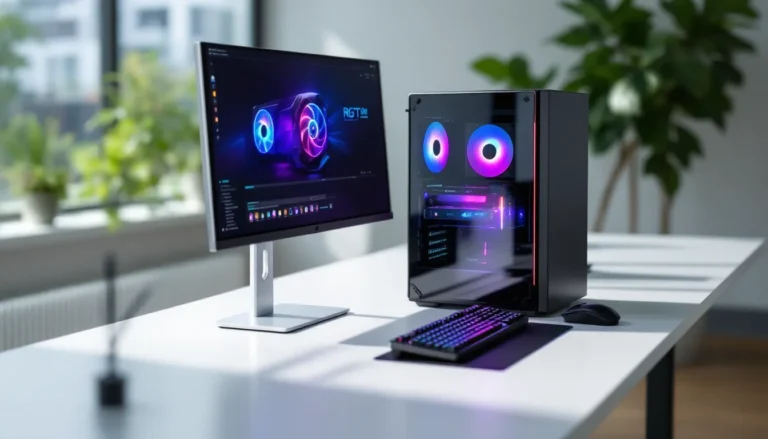
You can’t blaze game on outdated hardware. Period. The minimum viable competitive setup in 2026 requires:
- GPU: RTX 4060 / RX 7600 or better for 1080p high-refresh gaming
- CPU: Ryzen 5 7600 / Intel i5-13400 minimum (competitive titles are increasingly CPU-bound)
- RAM: 16GB DDR5 (32GB if streaming or recording)
- Storage: NVMe SSD mandatory for load times and asset streaming
These aren’t aspirational specs, they’re baseline requirements to maintain stable framerates above 144 FPS in current competitive titles. Dropping below your monitor’s refresh rate even occasionally introduces inconsistency that will cost you gunfights.
For laptop gamers, recent performance testing shows that modern mobile GPUs in the RTX 4070 Mobile tier can handle competitive gaming at high refresh rates, though you’ll sacrifice some settings fidelity compared to desktop equivalents.
Monitor Refresh Rates and Input Lag Reduction
240Hz has become the competitive standard, with 360Hz representing the bleeding edge for players who can actually perceive the difference. More importantly than raw refresh rate: your monitor’s total input lag (processing delay plus pixel response time) should be under 5ms.
Variable refresh rate tech (G-Sync/FreeSync) is non-negotiable. Frame tearing and stuttering during critical moments will sabotage your performance regardless of your skill level. Make sure you’re actually enabling VRR in both your GPU control panel and monitor OSD, surprisingly common oversight.
Panel technology matters less than the community thinks. A quality TN panel with 1ms response time will outperform a mediocre IPS every time for competitive play. If you want color accuracy and viewing angles, buy an IPS or OLED for content consumption and keep a dedicated TN or fast IPS for ranked grinding.
Peripheral Selection: Mouse, Keyboard, and Controller
Mouse selection in 2026 has become almost scientifically precise. Competitive players gravitate toward lightweight wireless designs (under 65g) with flagship sensors like the PixArt PAW3950 or equivalent. Polling rate wars have reached 8000Hz on some models, though diminishing returns kick in hard past 1000Hz for most players.
Shape matters more than specs. A perfectly spec’d mouse with the wrong ergonomics for your grip style will underperform. Try before you buy whenever possible, many gaming cafes and LAN centers now stock multiple models for testing.
For keyboard users (primarily PC FPS and MOBA players), mechanical switches with 1.5-2mm actuation points provide the best balance of speed and control. Hall effect keyboards have gained traction in 2026 thanks to their adjustable actuation and immunity to key chatter, though they carry a price premium.
Controller players should prioritize hall effect joysticks (standard on the newest Xbox Elite and PlayStation Edge controllers) to eliminate stick drift and enable more precise aim input curves.
Training Routines to Elevate Your Blaze Gaming Skills
Aim Training and Accuracy Drills
Dedicated aim training isn’t optional anymore. Kovaak’s FPS Aim Trainer and Aim Lab both offer scenario libraries specifically designed for different game genres and weapon types. The key isn’t grinding random scenarios, it’s identifying your specific weaknesses and targeting them with appropriate drills.
For tracking-heavy games (Apex, Overwatch), focus on smooth tracking scenarios at various distances and movement speeds. Flick-based games (Valorant, CS2) require static clicking and quick target acquisition drills. Don’t neglect target switching, realistic gameplay rarely involves isolated 1v1 scenarios.
Quantify your progress. Both major aim trainers provide detailed statistics on accuracy, reaction time, and consistency. If you’re not improving your scores over 2-4 week periods, your training approach needs adjustment. Top players typically dedicate 20-30 minutes to pure aim training before ranked sessions.
Building Muscle Memory Through Repetition
Muscle memory is a misleading term, you’re actually building neural pathways that make complex input sequences feel automatic. This requires thousands of repetitions performed correctly, not mindlessly.
For fighting game players, this means drilling combos until you can execute them while distracted. For shooter players, it’s practicing recoil control patterns until compensation becomes subconscious. The quality of repetition matters infinitely more than quantity. Ten perfect executions beat a hundred sloppy ones.
Many competitive gamers use custom lobbies or practice modes to isolate specific mechanics. Apex players drill movement tech in the firing range. Valorant players run bot scenarios focused on specific agent abilities. Tekken players spend hours in practice mode perfecting punish combos and wall sequences.
Analyzing Your Gameplay for Continuous Improvement
Recording and reviewing your gameplay feels tedious until you realize how much you miss in the moment. Watch your deaths specifically, not to flame yourself, but to identify patterns. Are you getting caught in the same rotations? Losing identical peek duels? Failing to track ultimate economy?
Platforms focused on competitive game analysis have evolved substantially in 2026, offering automated VOD review that flags positioning errors, mechanical misplays, and macro-level decision mistakes. The technology isn’t perfect, but it rapidly identifies improvement areas that might take you dozens of games to notice manually.
Compare your gameplay to top players in your main title. Not to copy them blindly, but to understand why they make specific decisions. When a pro takes an off-angle or burns an ability early, there’s usually reasoning you can extract and adapt to your own play.
The Competitive Scene: Tournaments and Esports Opportunities
How to Break Into Competitive Blaze Gaming
The path to competitive play starts with ranked mode, but doesn’t end there. Reaching top percentile rankings (Diamond+, Master tier, etc.) proves you have the mechanical foundation, but tournament play requires additional skills: mental resilience, team coordination, and adaptation under pressure.
Start with online tournaments. Platforms like Battlefy, Challengermode, and game-specific hubs host daily competitions with modest or zero entry fees. These events provide tournament experience without significant financial risk. Even if you bomb out early, you’re learning to manage match nerves and time pressure.
Networking matters more than most competitive aspirants realize. Join Discord communities focused on your main game, participate in scrims, and actively look for teams or create your own. Free agency rarely works, teams get built through relationships and demonstrated reliability.
Consider specializing initially. The players who break through competitive barriers fastest typically master a specific role, character, or playstyle before expanding their repertoire. Flexibility comes after expertise, not before.
Major Tournaments and Prize Pools to Watch
The 2026 competitive calendar is stacked. Apex Legends Global Series continues offering the largest combined prize pool in battle royale esports, with the Championship event scheduled for September featuring $5 million in total prizes. Regional qualifiers run quarterly, giving players multiple entry points.
Valorant Champions Tour expanded to include two international Masters events plus Champions, with the total 2026 prize pool exceeding $10 million when including regional leagues. The partnership league system has stabilized, though the challenger scene still offers open qualification paths.
Fighting game majors have consolidated around several key events. EVO 2026 (August, Las Vegas) remains the prestige pinnacle, while the Capcom Pro Tour and Tekken World Tour offer structured competitive seasons with points-based qualification. Winning a major CPT event guarantees your spot at Capcom Cup, which carries a $1 million prize pool.
Don’t sleep on tier-2 and tier-3 events. Regional tournaments with $5,000-$25,000 prize pools provide realistic competitive opportunities for skilled players who aren’t quite pro-level yet. Several current tier-1 pros started their careers grinding these events for experience and modest payouts.
Common Mistakes That Hold Blaze Gamers Back
Overcommitting and Poor Engagement Choices
The biggest trap in blaze gaming? Confusing aggression with recklessness. Overcommitting to unfavorable engagements kills more ranked climbs than any mechanical deficit.
You see this constantly: a player gets one kill and immediately pushes for the second without resetting or gathering information. Or they commit an ultimate ability to secure a trade when they already have numerical advantage. These mistakes stem from adrenaline and impatience, not lack of knowledge.
Learning when to disengage is harder than learning when to engage. Top players develop intuition for fight evaluation, they can gauge within a second whether continuing an engagement favors them. This comes from experience, but you can accelerate the learning process by actively asking “what’s my win condition here?” before committing resources.
Neglecting Game Sense for Pure Mechanics
The mechanical grind is seductive because progress feels measurable and concrete. But players who max out their aim training scores while ignoring map knowledge, meta understanding, and opponent psychology hit a hard ceiling.
Game sense develops slower than mechanics and requires different training. It means studying patch notes to understand meta shifts, watching pro VODs to learn rotation patterns, and reviewing your own games to identify recurring decision errors.
This imbalance shows up clearly around the Diamond/Master rank boundary in most competitive games. Below that threshold, superior mechanics can brute-force wins. Above it, everyone can aim, game sense becomes the primary differentiator.
Burnout and the Importance of Taking Breaks
Blaze gaming demands intensity that isn’t sustainable 24/7. Players who grind 8-12 hour sessions daily without breaks inevitably hit performance walls, and often mental health crises.
Burnout manifests as degraded reaction time, increased tilt, and inability to focus during crucial moments. You’ll notice it first in your consistency: games that used to feel easy suddenly require maximum effort. Mechanical execution that was automatic requires conscious thought again.
Top competitors schedule breaks aggressively. Many pros take at least one full day off per week, with some taking extended breaks between competitive seasons. This isn’t laziness, it’s performance optimization. Your brain needs recovery time to consolidate learning and maintain peak cognitive function.
Physical health directly impacts gaming performance. Sleep deprivation, poor nutrition, and lack of movement all degrade reaction time and decision-making. You don’t need an athlete’s regimen, but basic sleep hygiene (7-8 hours), regular meals, and occasional exercise will materially improve your gameplay.
The Future of Blaze Gaming: Trends to Watch in 2026 and Beyond
The evolution of blaze gaming shows no signs of slowing. Several emerging trends will reshape competitive gaming over the next 12-24 months.
AI-assisted training tools have moved beyond basic aim trainers. New platforms analyze your gameplay in real-time, providing immediate feedback on positioning errors, ability usage efficiency, and engagement timing. Some tools even generate custom training scenarios based on your specific weaknesses. The technology is still maturing, but early adopters report measurable improvement curves.
Cross-platform competitive parity is finally becoming reality. Modern input-based matchmaking and platform-specific balancing mean controller players can compete with mouse-keyboard users without either side claiming insurmountable disadvantage. This expansion of the competitive player pool raises the skill floor across all ranks.
Spectator-focused game design is influencing new title development. Developers increasingly build games with esports viewership in mind from day one, not as an afterthought. This means clearer visual clarity, more intuitive ability recognition, and match pacing optimized for broadcast. Games designed this way tend to favor the aggressive, highlight-generating gameplay that defines blaze gaming.
The hardware race continues. 8K gaming remains impractical for competitive play (and likely will for years), but 480Hz monitors are entering the market and early testing suggests perceptible advantages for elite-level players. Whether this becomes standard or remains niche depends largely on price accessibility.
Most importantly, the competitive scene is professionalizing rapidly. More games are implementing structured competitive ladders with meaningful rewards, easier tournament qualification paths, and better amateur-to-pro pipelines. If you’re serious about competitive gaming, 2026 offers more viable paths than any previous year.
Conclusion
Blaze gaming represents the cutting edge of competitive play across multiple genres. It demands mechanical precision, cognitive speed, and mental resilience that casual gaming simply doesn’t require. But for players willing to put in focused training and thoughtful practice, the improvement curve is real and measurable.
Start with the fundamentals: reaction time, positioning, and game sense. Build your setup to eliminate hardware bottlenecks. Train deliberately, not just extensively. Analyze your gameplay honestly, and don’t confuse activity with progress.
The competitive scene has never been more accessible or more rewarding. Whether you’re chasing tournament placements or just want to dominate ranked lobbies, the principles remain the same. Play fast, play smart, and never stop learning.