VR horror hits different. It’s one thing to watch a jump scare unfold on a monitor, it’s another when the monster is breathing down your neck in 360 degrees. But here’s the good news: you don’t need to drop cash on AAA titles to get scared witless. The VR horror scene is packed with free experiences that’ll make you question whether saving money was worth the nightmares.
This guide rounds up 27 free VR horror games across Meta Quest, PC VR, and PlayStation VR2. Whether you’re hunting for slow-burn atmospheric dread or relentless jump scares, there’s something here to wreck your sleep schedule. Let’s dig in.
Table of Contents
ToggleKey Takeaways
- Free VR horror games deliver genuinely terrifying experiences without requiring expensive AAA purchases across Meta Quest, PC VR, and PlayStation VR2 platforms.
- VR horror intensifies fear through presence and immersion—360-degree environments, spatial audio, and physical interactions trigger real fight-or-flight responses that flat-screen horror cannot replicate.
- Popular free VR horror titles like Affected: The Manor, Face Your Fears 2, and Cosmodread range from atmospheric slow-burns to relentless jump scares, giving players diverse options regardless of scare tolerance.
- Itch.io, SideQuest, and official store free sections provide access to hundreds of free VR horror experiences, including experimental indie projects and limited-time promotional content.
- Managing comfort while playing—adjusting audio levels, taking regular breaks, using accessibility settings, and maintaining real-world awareness—allows you to enjoy free VR horror without overwhelming anxiety.
Why VR Horror Games Are So Terrifying
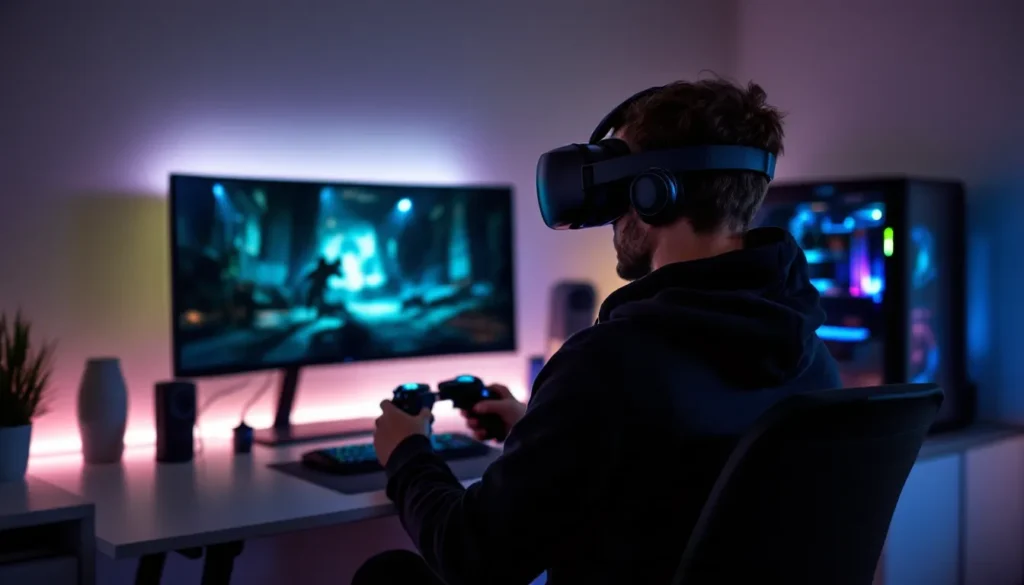
VR removes the safety net. When playing flat-screen horror, you’re watching a character experience terror. In VR, you are the character. Your brain processes the environment as real space, triggering genuine fight-or-flight responses.
Presence makes all the difference. That creaking door isn’t happening to someone else, it’s three feet from your face. The spatial audio puts footsteps behind you, beside you, above you. When you instinctively duck or flinch, that’s not a conscious choice. It’s your lizard brain taking over.
The immersion also means there’s nowhere to hide. You can’t look away from the screen because the screen is everywhere. Turning your head doesn’t save you, it just shows you what’s lurking in your peripheral vision. This constant vulnerability amplifies every scare, every sound, every shadow.
Physical interaction amps up the stakes. Opening a door requires reaching out and turning the handle. Reloading a gun means manually ejecting the mag and slapping in a new one. These tactile actions ground you in the nightmare, making every moment feel consequential.
Best Free VR Horror Games for Meta Quest
Top Atmospheric Horror Experiences
Cosmodread (Demo) sets you adrift in procedurally generated space stations where resource management meets cosmic horror. The full game costs money, but the demo delivers enough creeping dread to justify the download. Permadeath mechanics make every encounter with the station’s inhabitants genuinely tense.
Affected: The Manor (Free Version) offers a tightly crafted haunted house experience. It’s short, about 15 minutes, but the environmental storytelling and sound design punch above their weight. The Quest 2 version runs smooth at 90Hz, maintaining immersion even during the heavier scare sequences.
The Haunt leans into classic horror tropes without apology. You’re exploring abandoned locations, asylums, mansions, the usual suspects, but the standalone Quest optimization means crisp visuals and responsive tracking. The free version includes three full levels, which is generous for a zero-dollar experience.
Propagation VR (Demo) gives you a taste of its zombie-infested campaign. The melee combat feels satisfyingly physical, bashing skulls with a pipe has weight to it. The demo caps at about 30 minutes, but it’s a solid showcase of what horror survival games can accomplish in VR.
Jump Scare Focused Titles
Face Your Fears 2 is pure adrenaline. Each level is a self-contained nightmare scenario designed to make you yelp. The clown level remains infamous in VR horror circles for good reason. It’s available free on the Quest store and supports hand tracking, though controllers offer better control during panic moments.
Dreadhalls pioneered procedural horror on VR platforms. Every playthrough shuffles the dungeon layout, keeping you disoriented. The darkness is oppressive, your lantern barely pushes it back, and the creatures hunting you don’t follow predictable patterns. It occasionally goes on sale for free, so check the Quest store regularly.
Sisters is a short film experience rather than a game, but it’s free and terrifying. You’re seated in a room during a thunderstorm, and things escalate. It’s five minutes of pure atmosphere that many veteran VR users still cite as one of their most memorable scares. Reviewers at PC Gamer have praised its effective use of spatial audio.
Affected: The Cabin (also from the Affected series) traps you in a woodland cabin with limited options. The pacing is methodical until it isn’t. The Quest version includes updated visuals from the original Gear VR release, making it feel fresh even if you’ve played it before.
Best Free VR Horror Games for PC VR (SteamVR & Oculus)
Story-Driven Horror Adventures
The Crow’s Eye (Free Prologue) drops you into an abandoned university where something went very wrong. The prologue is free on Steam and serves as a full chapter of the main game. Physics-based puzzles blend with environmental horror, and the VR implementation adds weight to every interaction.
Organ Quarter (Demo) channels classic survival horror vibes, think Silent Hill meets VR. The demo offers about an hour of gameplay through fog-choked streets and claustrophobic interiors. Ammo scarcity forces you to pick your fights, and the manual reloading system makes every bullet count.
The Lab: Xortex isn’t horror in the traditional sense, but the bullet-hell intensity and alien designs create a different flavor of dread. It’s part of Valve’s free VR suite and runs buttery smooth on most PC VR setups.
Spooky’s Jump Scare Mansion: HD Renovation (Demo) subverts expectations. What starts as goofy cardboard cutouts gradually morphs into legitimate horror. The demo includes the first 100 rooms (of 1000), which translates to several hours of content. The cute aesthetic makes the actual scares land harder.
Paranormal Activity: The Lost Soul (Demo) adapts the film franchise into a house exploration nightmare. The demo covers the opening chapter, showcasing how horror survival games leverage VR presence. Objects move on their own, doors slam, and you’re defenseless. SteamVR tracking handles the physicality well.
Multiplayer Horror Experiences
VR Chat Horror Worlds might seem like a weird inclusion, but the community has built genuinely terrifying maps. Worlds like “The Devouring” and “Silent Hill” recreations are free to explore solo or with friends. Quality varies wildly, but the best ones rival paid horror experiences.
Phasmophobia (During Free Weekends) regularly offers free trials on Steam. When it does, jump on it. The co-op ghost hunting gameplay has defined a subgenre. Using actual ghost-hunting equipment, EMF readers, thermometers, spirit boxes, to identify entities creates emergent horror moments.
Devour (Free Demo) pits up to four players against a possessed cult leader. The demo restricts you to one map, but the core loop of gathering items while a supernatural threat stalks your team works beautifully. The VR version supports cross-play with flat-screen players, expanding your potential teammate pool.
No One Survives (Free on Itch.io) offers asynchronous multiplayer where one player is the monster hunting VR players. It’s janky and rough around the edges, but when a session clicks, it delivers genuine cat-and-mouse terror. The small community means finding matches can be hit-or-miss.
Experimental and Indie Horror Titles
A Chair in a Room: Greenwater (Demo) takes a grounded approach to horror. You’re investigating disappearances in a small town, and the narrative unfolds through environmental clues and audio logs. The demo covers chapter one, establishing a slow-burn mystery that respects your intelligence.
Accounting (Free) comes from the creators of The Stanley Parable. It’s surreal horror-comedy that gets progressively darker and stranger. It’s free on Steam, runs about 30 minutes, and will make you laugh before making you uncomfortable.
Emily Wants to Play (Free Weekends/Promotions) occasionally pops up as a freebie. You’re a pizza delivery person trapped in a house with haunted dolls following specific rules. Learning their patterns is the key to survival, but the initial encounters are pure panic. Coverage from Rock Paper Shotgun highlighted its effective use of AI behavior.
SCP: Labrat adapts the SCP Foundation creepypasta universe into VR. You’re a test subject navigating anomalous entities and environments. It’s free on Steam, community-developed, and deeply weird. Familiarity with SCP lore enhances the experience but isn’t required.
The Exorcist: Legion VR (Chapter 1 Free) gives you the first chapter of its episodic series for free. You’re an investigator dealing with demonic activity, and the production values are surprisingly high. The VR-specific interactions, performing exorcism rituals, examining possessed objects, feel purposeful rather than gimmicky.
Best Free VR Horror Games for PlayStation VR2
The PSVR2 free horror selection is leaner than other platforms, but what’s available makes good use of the hardware.
Resident Evil Village (Maiden Demo) was initially a PSVR exclusive before the full game launched. The demo puts you in a castle dungeon with no weapons and something very interested in your whereabouts. The PSVR2 version benefits from eye-tracking, making the already intense experience even more immersive. Enemies react to where you’re actually looking.
The Dark Pictures: Switchback VR (Demo) offers a taste of the on-rails horror shooter. You’re riding through nightmare scenarios inspired by the Dark Pictures anthology, shooting threats while the track takes you deeper into terror. The DualSense haptics shine here, you feel every bump, every creature impact.
Cosmodread (PSVR2 Demo) mirrors the Quest version but leverages the improved visual fidelity. The OLED display makes the darkness feel truly oppressive, and the adaptive triggers add resistance when you’re opening jammed doors or firing weapons.
The Walking Dead: Saints & Sinners (Free Trial Weekends) occasionally offers free play periods on PlayStation Store. When available, it’s worth grabbing. The physics-based combat system feels visceral on PSVR2, and the stamina management adds strategic depth to zombie encounters similar to what you’d find in other horror survival games.
Sony occasionally rotates free VR content through PlayStation Plus, so checking the monthly offerings is worthwhile. Horror titles show up in the rotation more often than you’d expect, likely because they’re effective showcase pieces for VR capabilities.
Hidden Gems and Underrated Free VR Horror Games
Escape the Ayuwoki started as a meme game, a Michael Jackson zombie chasing you through a mansion. But the actual game delivers solid stealth-horror gameplay. It’s free, it’s weird, and it’s more competent than it has any right to be.
The Morrigan is a free Irish folklore horror game on Itch.io. You’re lost in woods haunted by a banshee, and the VR implementation emphasizes vulnerability. There’s no combat, just you, the dark, and something that doesn’t want you to leave. The lo-fi graphics work in its favor, creating an unsettling ambiguity.
Nightmare Therapy flips the script, you’re undergoing exposure therapy in VR within the game itself. The meta-commentary gets trippy, and the scares escalate as your therapist’s methods become questionable. It’s short (about 20 minutes), free on Steam, and genuinely creative.
Don’t Knock Twice (Demo) adapts the Welsh folklore game into VR. The demo covers the opening sequences where you explore a haunted house tied to your daughter’s disappearance. The hand presence and object interaction make mundane actions, lighting candles, opening drawers, feel pregnant with dread.
Narcosis (Demo) isn’t traditional horror but underwater survival that induces deep dread. You’re stuck on the ocean floor after an industrial disaster, and your oxygen is finite. The crushing darkness and isolation create sustained anxiety rather than jump scares. The demo is available on Steam and showcases the full game’s atmosphere.
Konrad’s Kittens masquerades as a cute cat cafe simulator before revealing its true nature. It’s free on Itch.io, and going in blind is half the fun. Just trust that it earns its horror tag within the first ten minutes.
For players interested in multiplayer frights, titles like those found in good Roblox horror games demonstrate how community creativity can rival professional studios, though most Roblox experiences aren’t yet fully VR-compatible.
How to Find and Download Free VR Horror Games
Official Store Free Sections
Each VR platform maintains a free games section that gets overlooked.
Meta Quest Store has a dedicated “Free” filter in the store interface. Browse by genre, select Horror, and you’ll surface titles you didn’t know existed. The store also highlights limited-time free promotions, grab them when they appear because they don’t last.
Steam’s VR Free-to-Play section is massive but poorly organized. Use tags to narrow results: combine “VR,” “Horror,” and “Free to Play” to filter the noise. Sort by user reviews to separate quality from shovelware. Enable email notifications for developers you like, some drop free content as promotional tie-ins.
PlayStation Store buries free VR content in the PS Plus section sometimes, but there’s also a general “Free Games” category. Check both. PSVR2 compatibility isn’t always clearly marked, so verify before downloading.
Oculus PC overlaps heavily with Steam but occasionally has exclusive freebies through promotional partnerships. Check both stores if you’re on PC VR, redundancy pays off.
Itch.io and Alternative Platforms
Itch.io is a goldmine for experimental horror. Use the advanced search: select VR under “Input methods,” Horror under “Genre,” and “Free or donationware” under pricing. The quality spectrum is wide, but you’ll find genuinely innovative projects that wouldn’t survive on commercial stores.
Developers use Itch for game jam entries, prototypes, and passion projects. Many eventually migrate to paid Steam releases, so you’re effectively beta testing tomorrow’s hits. Leave feedback, devs are usually active in comments and appreciative.
SideQuest (for Meta Quest) requires developer mode but opens access to hundreds of community-created experiences. The horror section includes both ports of PC games and Quest-native experiments. Installation is straightforward once you’ve enabled developer mode through the Oculus app.
Game Jolt hosts VR content too, though less than Itch. Check their VR tag and filter for horror. The curation is minimal, but the community rating system helps surface standouts.
Don’t sleep on Humble Bundle and Epic Games Store. While not VR-specific, both occasionally offer VR-compatible horror games for free during promotional periods. According to Game Informer, these limited-time offers have included major VR titles in the past. Claim them when you see them, your library will thank you.
Tips for Playing VR Horror Games Without Getting Too Scared
First, control your environment. Play in a well-lit room even if you’re in a dark virtual space. Your peripheral vision catching familiar real-world objects reminds your brain this isn’t actually happening. Cracking a window for fresh air helps too, VR headsets get warm, and overheating amplifies discomfort.
Take breaks. VR horror is physically and mentally draining. The adrenaline dump from sustained fear is real. Set a timer for 20-30 minute sessions if you’re prone to motion sickness or anxiety. There’s no shame in stepping away, the game will be there when you return.
Adjust audio levels strategically. Spatial audio is crucial for immersion, but you don’t need it at max volume. Lowering it slightly reduces intensity without breaking presence. Some players keep one ear slightly off the headphone cup to maintain real-world awareness.
Play with friends in the room. Even if it’s a single-player game, having people nearby grounds you. They can watch your monitor feed and laugh at your reactions, which defuses tension. It transforms terror into a shared experience rather than an isolating one.
Use comfort settings without guilt. Many VR horror games include options for teleport movement, vignette effects during rotation, or reduced graphical intensity. These aren’t cheats, they’re accessibility features. A slightly less scary experience that you can finish beats an overwhelming one you abandon.
Remember you’re in control. You can always remove the headset. That escape hatch matters more than you’d think. Knowing you have an instant exit reduces the trapped feeling that amplifies VR horror. Some players keep a hand on the headset release during intense sections.
Start with shorter experiences. Don’t jump straight into two-hour campaigns. Build tolerance with 10-15 minute demos or arcade-style horror. Your brain needs time to calibrate to VR fear responses, much like how traditional horror games for kids introduce scares gradually.
System Requirements and Performance Optimization
Meta Quest 2/3/Pro handles most free horror games smoothly since they’re optimized for standalone hardware. The Quest 2’s Snapdragon XR2 chipset can struggle with poorly optimized indie titles, expect occasional frame drops in complex scenes. Quest 3’s improved GPU helps but doesn’t eliminate issues with janky ports.
Storage fills up fast. Free games still take space, budget 1-5GB per title. Quest devices top out at 128GB or 256GB, so uninstall what you’re not playing. Cloud saves (when supported) let you reinstall without losing progress.
PC VR minimum specs for free horror games generally align with Steam’s VR baseline: GTX 1060 or RX 480, 8GB RAM, and a modern i5. That’ll run most indie horror titles at acceptable frame rates. Demanding demos like RE Village: Maiden want RTX 2060+ territory for consistent 90Hz.
SuperSampling improves clarity but tanks performance. Start at 1.0x and increase only if you’re hitting your headset’s refresh rate consistently. Horror games often use darkness to hide lower-poly assets, so cranking resolution yields diminishing returns compared to action games.
PSVR2 handles its library well since games are optimized for fixed hardware. The PS5’s SSD eliminates load times that can break immersion. Expect most free demos to hit the native 90Hz or 120Hz depending on the title. Eye-tracking and foveated rendering mean visual quality stays high without the performance cost you’d see on PC.
Wired vs. wireless matters for PC VR. Air Link and Virtual Desktop introduce latency and compression artifacts. For horror, where audio sync and visual clarity amplify scares, a wired connection via Link Cable or dedicated DisplayPort maintains quality. The tether is annoying but worth it for consistent frametimes.
Monitor your temperatures. VR pushes hardware harder than flat gaming. GPU temps above 80°C or CPU above 85°C in sustained sessions means inadequate cooling. Throttling causes stuttering, which in horror contexts can trigger motion sickness. Clean your PC, improve airflow, or lower settings.
Disable unnecessary background apps. Close Chrome, Discord overlays, RGB software, anything consuming GPU cycles. VR horror demands consistent frame pacing more than raw FPS. A steady 72Hz beats an unstable 90Hz every time.
Update your GPU drivers regularly but cautiously. New drivers optimize for recent releases but occasionally break older VR titles. If a game worked last week and doesn’t now, roll back the driver. Keep a stable driver version noted for when you need to troubleshoot.
Conclusion
Free VR horror proves you don’t need a budget to get quality scares. From Quest’s standalone experiences to PC VR’s experimental indie scene, there’s enough content to keep you terrified for months. The platform differences matter less than finding experiences that match your tolerance, whether that’s atmospheric slow-burns or relentless jump-scare assaults.
The VR horror landscape keeps evolving. Developers use free releases to test mechanics, build audiences, and push creative boundaries that paid releases can’t risk. That makes the free tier exciting, you’re not getting watered-down content: you’re getting laboratories of innovation.
Start with shorter experiences, find your comfort zone, and gradually push into deeper waters. The games on this list range from polished demos of commercial titles to weird passion projects that shouldn’t work but absolutely do. Mix and match platforms if you can, cross-pollination between Quest, PC VR, and PSVR2 libraries maximizes your access to different horror philosophies.
Keep checking stores and alternative platforms. New free releases drop weekly, and limited-time promotions can land major titles in your library for zero investment. The barrier to entry has never been lower, and the payoff, genuine, heart-pounding terror, has never been more accessible. Just maybe keep the lights on.