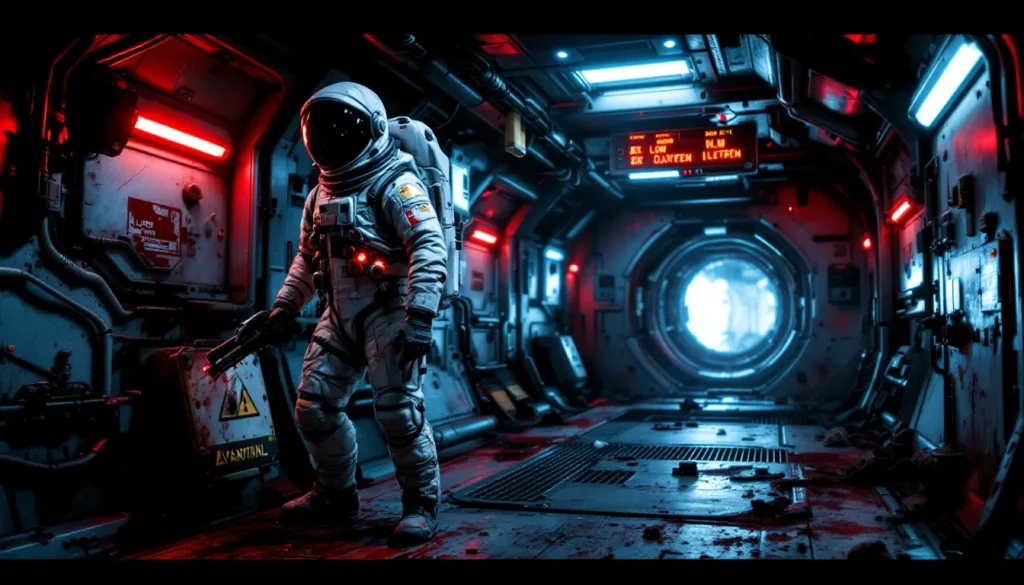
There’s something uniquely terrifying about being stranded in the void. No help. No escape. Just you, a failing hull, and something lurking in the darkness beyond the airlock. Space horror games tap into primal fears, isolation, suffocation, the unknown, and amplify them with sci-fi dread that survival horror on Earth just can’t match.
In 2026, the genre is thriving. From AAA remakes that reimagine classics to indie devs crafting claustrophobic nightmares in Unity, space horror has never been more diverse or more terrifying. Whether you’re a veteran of the Dead Space franchise or a newcomer looking for your first nightmare in orbit, this guide covers everything: what makes these games so effective, the must-play titles across all platforms, core mechanics you need to master, and how the genre stacks up against other horror subgenres.
Table of Contents
ToggleKey Takeaways
- Space horror games weaponize isolation, sound design, and resource scarcity to create psychological terror that surpasses traditional survival horror through existential dread and environmental hazard systems.
- Mastering resource management—oxygen, ammo, and health discipline—is essential for surviving space horror games, requiring precision aiming and strategic decision-making over reckless combat.
- Dead Space Remake and Alien: Isolation stand as genre-defining masterclasses, while indie titles like Routine and Cosmodread push space horror boundaries with roguelike mechanics and VR immersion.
- Platform choice significantly impacts space horror experiences, with PS5’s DualSense haptics and 3D audio, PC ray-tracing capabilities, and VR headsets each offering distinct atmospheric advantages.
- Next-generation technology—ray-traced lighting, AI-driven procedural generation, and neural rendering—enables space horror games to evolve with smarter antagonists and microscopic environmental detail that sustains immersion.
- The genre thrives in 2026 by combining zero-gravity mechanics, sci-fi existential threats, and psychological isolation to deliver scares impossible in Earth-bound horror, making space horror gaming uniquely terrifying.
What Makes Space Horror Games So Terrifying?
Space horror doesn’t just scare you, it breaks you down psychologically. The genre weaponizes environmental dread in ways traditional horror can’t replicate. When you’re on a derelict station orbiting a gas giant, there’s no running home. No calling for backup. Just you and the void.
The Psychological Impact of Isolation in Space
Isolation in space horror isn’t just loneliness, it’s existential terror. Games like Alien: Isolation (2014) and Observation (2019) weaponize this by stripping away any sense of safety. You’re dozens of light-years from help, and every encounter could be your last.
The absence of natural life cues amplifies anxiety. No day/night cycle. No weather. No birds chirping to signal safety. Just sterile corridors, flickering lights, and the constant hum of life support that might fail at any moment. Developers lean into this by designing environments that feel abandoned but not empty, bloodstains suggest someone was here, logs hint at what happened, but you’re still fundamentally alone.
Research in environmental psychology shows isolation increases susceptibility to paranoia and hallucinations. Games exploit this by making you question what’s real. Was that shadow a creature or a glitch? Is the AI helping you or manipulating you? When you can’t trust your senses, fear compounds.
How Sound Design Amplifies Fear in the Void
In space, no one can hear you scream, but you can hear everything else. Sound design in space horror is brutally effective because it plays on contradiction: space should be silent, but inside your helmet or ship, every creak, groan, and distant clang is amplified.
Dead Space (2008, remade in 2023) pioneered directional audio that forces you to constantly check your surroundings. The necromorphs’ shrieks echo through vents, making you paranoid about every shadow. The Ishimura itself becomes an auditory threat, hull stress, depressurizing chambers, malfunctioning machinery all signal danger without showing it.
Ambient sound layers create persistent unease. Low-frequency drones (below 20 Hz) trigger physiological fear responses, your body reacts before your brain processes the threat. Then there’s the silence: prolonged quiet makes you hyper-aware, so when a stinger hits, the cortisol spike is visceral.
Modern spatial audio (Dolby Atmos, Sony 3D Audio) makes this worse. In VR titles like Cosmodread (2020), you’ll spin in circles trying to locate a sound that’s coming from everywhere and nowhere. That’s not a bug, it’s the point.
Best Space Horror Games You Need to Play
The genre spans decades and budgets. From genre-defining classics to experimental indies, here’s what deserves your time in 2026.
Classic Space Horror Titles That Defined the Genre
These are the foundations. If you haven’t played them, you’re missing critical context for why the genre works.
Dead Space (2008) / Dead Space Remake (2023, PC/PS5/Xbox Series X
|
S)
Visceral Games created the blueprint. Engineer Isaac Clarke boards the USG Ishimura to fix communications and discovers a necromorph outbreak. Strategic dismemberment, resource scarcity, and the iconic Plasma Cutter make every encounter tense. The 2023 remake adds volumetric lighting and overhauled audio that justify revisiting even if you beat the original.
Alien: Isolation (2014, PC/PS4/PS5/Xbox One/Xbox Series X
|
S/Switch)
Creative Assembly nailed the franchise’s horror roots. Playing as Amanda Ripley, you navigate Sevastopol Station while the Xenomorph hunts you with adaptive AI that learns your tactics. No two playthroughs feel identical because the alien doesn’t follow scripts, it hunts. The recent Switch port (2023) runs surprisingly well in handheld for portable dread.
System Shock 2 (1999, PC)
Looking Glass Studios blended RPG progression with horror survival. The Von Braun starship, SHODAN’s antagonism, and branching skill trees created emergent gameplay where every build plays differently. It’s janky by 2026 standards, but mods like Rebirth (2024) modernize visuals without losing the original’s oppressive atmosphere.
Event Horizon: The Lost Mission (Hypothetical, no official game exists)
While there’s no official Event Horizon game, its influence echoes through titles like The Callisto Protocol (2022) and Negative Atmosphere (in development). The concept, cosmic horror meets industrial decay, remains a touchstone.
Modern Space Horror Games Pushing Boundaries
Post-2020 entries leverage new hardware and design philosophies to evolve the formula.
The Callisto Protocol (2022, PC/PS5/Xbox Series X
|
S)
Glen Schofield’s spiritual successor to Dead Space swaps dismemberment for brutal melee combat on Jupiter’s moon. The game polarized fans, some loved the visceral GRP glove mechanics, others felt it leaned too hard into action. Patch 5.02 (August 2022) rebalanced difficulty and added performance modes that help on consoles.
Routine (2023, PC/Xbox Series X
|
S)
Lunar Research Station gameplay in a detailed horror survival games format delivers roguelike permadeath with no HUD, no checkpoints, and a focus on environmental storytelling. Every run teaches you the station’s layout while escalating threats. It’s hardcore, but the immersion is unmatched.
Negative Atmosphere (TBA, PC)
This indie project from Sunscorched Studios aims to recapture early Dead Space vibes with Unreal Engine 5. As of March 2026, it’s still in development, but alpha footage shows promise, nanite-enabled detail and Lumen lighting create shadows you’ll second-guess constantly.
Scorn (2022, PC/Xbox Series X
|
S)
Ebb Software’s biomechanical nightmare drew from H.R. Giger and Zdzisław Beksiński. It’s more atmospheric puzzle-horror than action, set in a hostile alien structure that feels like it’s digesting you. Divisive for its obtuse puzzles, but the art direction is unforgettable.
Hidden Gems and Indie Space Horror Experiences
Don’t sleep on smaller studios, they’re where the genre experiments.
Moons of Madness (2019, PC/PS4/Xbox One)
Rock Pocket Games mixes Lovecraftian horror with Mars colonization. As a technician on a research outpost, you uncover eldritch secrets while managing oxygen and sanity. It’s short (6-8 hours) but effective, especially if you’re into cosmic horror over monster closets.
Prey (2017, PC/PS4/Xbox One)
Arkane Studios’ immersive sim on Talos I station is part horror, part RPG sandbox. Typhon aliens mimic objects, forcing you to scan every room for mimics disguised as coffee mugs. The Mooncrash DLC (2018) adds roguelike survival that’s even more intense than the base game.
Cosmodread (2020, PC VR/Quest 2)
Dreadful interactive’s procedural space station horror in VR nails the vulnerability factor. Every run randomizes layouts and threats. You’re slow, fragile, and constantly low on ammo. Perfect for VR horror fans who found RE7 too predictable.
SOMA (2015, PC/PS4/Xbox One)
Frictional Games’ underwater (not space, but same isolation) existential nightmare questions identity and consciousness. The horror games for PS5 catalog benefits from its backwards compatibility, PATHOS-II station’s oppressive depths feel fresh even in 2026.
Observation (2019, PC/PS4)
No Code’s narrative thriller casts you as S.A.M., an AI observing a disaster aboard a space station. The hook: you manipulate cameras and systems while slowly realizing you might be complicit in the crew’s fate. More psychological thriller than jumpscare fest, but the dread lingers.
Key Gameplay Mechanics in Space Horror Games
Understanding core systems helps you survive, and appreciate why these games feel so oppressive.
Resource Management and Survival Systems
Space horror thrives on scarcity. You’re never comfortable, never overstocked. Everything has weight, literal and strategic.
Oxygen and life support are the genre’s signature stressor. Games like Routine and Breathedge (2021) give you limited air in depressurized zones, forcing time-sensitive decisions. Do you explore that side room for loot or head back to safety? The timer creates urgency survival horror on solid ground can’t match.
Ammo and health follow the same philosophy. Dead Space famously gives you just enough to survive if you aim well. Miss shots and you’re screwed. Stasis modules and kinesis offer alternatives to gunplay, but they drain energy, another resource to juggle. The 2023 remake added the Intensity Director, dynamically adjusting enemy spawns based on your resources. Running low? Enemies back off slightly. Fully stocked? Prepare for ambushes.
Crafting systems vary by title. The Callisto Protocol keeps it minimal (health injectors, ammo), while Prey offers robust fabrication that rewards exploration. Either way, scavenging becomes ritual, you’ll compulsively check every drawer, corpse, and locker because that medkit you ignore now might cost you a run later.
Save systems gate progress deliberately. Alien: Isolation forces manual saves at terminals, meaning every trip between save points is a risk. Die and you lose progress. It’s punishing by modern standards, but it makes survival mean something.
Stealth Versus Combat: Choosing Your Survival Strategy
Not every space horror game lets you fight back, and even when you can, it’s often a trap.
Stealth-focused design emphasizes avoidance. In Alien: Isolation, direct combat with the Xenomorph is suicide. You crouch, use motion trackers, hide in lockers, and pray. The game rewards patience, rushing gets you killed. Sound propagation matters: running alerts threats, throwing flares creates diversions, and even your tracker’s beeps can give you away if held too long.
Combat-heavy titles like Dead Space and The Callisto Protocol still limit you. Enemies absorb damage, ammo is finite, and crowd control matters. Strategic dismemberment in Dead Space means targeting limbs, not center mass. The Plasma Cutter remains meta because it’s ammo-efficient and versatile, horizontal for legs, vertical for arms. The Contact Beam melts bosses but burns through power nodes, so you ration it.
Hybrid approaches give players options. Prey lets you spec into stealth (Phantom Shift, Psychoshock) or combat (Combat Focus, weapon upgrades). Neither is objectively better, playstyle determines strategy. Speedrunners exploit mimic abilities to bypass fights: completionists clear every enemy for loot.
The best space horror games make you choose when to fight. Engaging every threat drains resources, but avoiding everything leaves you under-equipped for mandatory encounters. That tension, knowing you could fight but probably shouldn’t, is what separates good horror from jump-scare spam.
How Space Horror Games Compare to Other Horror Subgenres
Space horror occupies a unique niche. It shares DNA with survival horror but diverges in key ways.
Space Horror Versus Traditional Survival Horror
Classic survival horror, Resident Evil, Silent Hill, grounds you in familiar but corrupted spaces: mansions, towns, hospitals. You know what these places should be, so the wrongness hits harder. Space horror flips this: environments are inherently alien and hostile. You’re already out of your element before threats appear.
Setting familiarity creates different fear profiles. Walking through a derelict spaceship in Dead Space feels isolating because you’re surrounded by incomprehensible tech and zero-G physics. Navigating Raccoon City in RE2 feels claustrophobic because you recognize streets and shops, but they’re wrong now. Both unsettle, but for opposite reasons.
Threat design varies too. Traditional survival horror favors shambling zombies, grotesque mutations, and psychological hauntings. Space horror leans into xenomorphs, necromorphs, and cosmic entities that violate physical laws. The latter often feel more unstoppable because they’re not bound by biology you understand.
Resource philosophy aligns more than you’d think. Both subgenres starve you of ammo, health, and saves. But space horror adds oxygen, power, and hull integrity, environmental hazards that persist even when enemies aren’t active. You can clear a room in RE4 and relax. In Alien: Isolation, the Xenomorph’s off-screen presence keeps you tense constantly.
Navigation structure differs significantly. Survival horror loves metroidvania-style backtracking, you unlock areas with key items and revisit old zones. Space horror often employs linear progression through modular stations or ships, with occasional returns for narrative beats. System Shock 2 and Prey are exceptions, offering full station exploration with RPG elements.
Much like the broader PlayStation horror games library, space horror benefits from platform-specific features: DualSense haptics on PS5 simulate hull breaches and heartbeat spikes, adding tactile dread.
The Role of Sci-Fi Elements in Enhancing Horror
Sci-fi doesn’t just provide a backdrop, it escalates horror through speculative dread.
Technology as unreliable narrator is a staple. Malfunctioning AI, corrupted data logs, and glitching systems make you question what’s real. In SOMA, the WAU’s definition of “preserving humanity” becomes body horror. In Observation, S.A.M.’s fragmented perspective suggests something beyond comprehension is pulling strings.
Existential threats scale beyond personal survival. Lovecraftian space horror, Moons of Madness, Outer Wilds: Echoes of the Eye (2021), introduces entities that don’t just kill you: they invalidate your existence. The fear isn’t death, it’s meaninglessness.
Body horror through sci-fi transformation hits differently than traditional infection. Necromorphs aren’t zombies, they’re biomechanical reconfigurations of corpses optimized for killing. The Marker’s influence in Dead Space isn’t a virus: it’s a signal rewriting DNA and perception. That’s scarier because it implies intentional design by something beyond human.
Zero-G and vacuum mechanics create unique horror scenarios. Fighting in zero-G (Dead Space’s vacuum sections) disorients you, no up or down, momentum carries you, and enemies attack from all angles. Depressurization sequences force split-second decisions: seal the breach or flee? These moments don’t translate to other horror subgenres.
According to IGN’s analysis of horror trends in 2025, space settings ranked highest for “oppressive atmosphere” ratings among surveyed players, edging out even gothic horror for sustained dread.
Tips for Surviving Your First Space Horror Game
First time strapped into a failing station? These fundamentals will keep you alive, or at least, alive longer.
Managing Resources and Oxygen Levels
Resource scarcity is the genre’s signature difficulty spike. Master these principles or prepare to restart constantly.
Loot everything, but prioritize. Every container matters early-game. Check corpses, lockers, desks, and environmental debris. Ammo and health are obvious, but don’t ignore crafting materials, they multiply in value later. In Dead Space, power nodes are rarer than health packs: save them for weapon upgrades (Plasma Cutter first) rather than unlocking all storage caches.
Count your shots. Spray-and-pray drains magazines fast. Space horror rewards precision. Aim for limbs (necromorphs), headshots (human enemies), or weak points highlighted by in-game scans. If a game offers a laser sight or ADS toggle, use it, hip-firing wastes ammo you can’t spare.
Oxygen management is non-negotiable in titles with life support mechanics. Always check your HUD for O2 timers before entering depressurized zones. Map out air refill stations (canister pickups, functioning life support rooms) so you can retreat safely. In Routine, experienced players memorize station layouts to plot efficient loops between oxygen sources.
Healing discipline separates survivors from corpses. Don’t heal at 70% HP unless you’re about to enter a boss fight or major encounter. Sit at 40-50% during exploration, it’s enough to tank one surprise hit. Use weak healing items (small medkits, food) first to avoid wasting strong heals (large medkits, syringes) on minor damage.
Save often, but smartly. Manual save systems tempt you to overwrite progress constantly. Don’t. Maintain multiple save slots so a bad decision doesn’t brick your run. Before risky areas (boss arenas, ambush corridors), create a new save. If you die repeatedly, revert to an earlier save with better resources rather than brute-forcing underequipped.
Navigating in Zero Gravity and Dark Environments
Spacefaring horror throws environmental curveballs traditional horror skips.
Zero-G movement feels counterintuitive at first. You don’t walk, you push off surfaces and drift until you hit something. In Dead Space’s vacuum chapters, overcompensating kills you faster than enemies. Use short thruster bursts to adjust trajectory mid-flight. Most zero-G games let you reorient yourself (usually via right stick or mouse), practice in safe zones before combat.
Three-dimensional threat awareness is critical. Enemies attack from above, below, and behind in zero-G. Audio cues become lifesaving, directional sound tells you which axis an enemy approaches from. Constantly rotate your camera. If using headphones (recommended), map sound to physical space so you can react faster.
Lighting tools are survival essentials in dark corridors. Flashlights in most space horror games have infinite battery but limited range, they reveal threats without solving darkness. Flares (throwable or handheld) illuminate wider areas and distract enemies in some titles. Glow sticks (Alien: Isolation) mark paths or safe zones for backtracking. Night vision or thermal vision modes (like the motion tracker in Alien) drain power, use sparingly.
Environmental hazards kill as often as enemies. Exposed wiring electrocutes, decompressing chambers suck you into space, and malfunctioning gravity plates drop you into chasms. Scan rooms before entering. Look for sparking panels, broken grates, or warning lights. Games telegraph danger, you just need to slow down and observe.
If you’re jumping from horror games Nintendo Switch titles to PC/console space horror, note the control differences: Joy-Con gyro aiming won’t translate, and Switch ports often downgrade lighting (critical for visibility). Adjust brightness settings before starting, space horror is meant to be dark, but if you can’t see threats, you’re just frustrated.
The Evolution of Space Horror Gaming
The genre’s trajectory mirrors gaming tech and design philosophy shifts. From text parsers to neural rendering, space horror adapts, and terrifies, in new ways.
From Early Text Adventures to Immersive VR Experiences
Space horror’s roots predate graphics. Starcross (1982, Infocom) was a text-based adventure where you explored a derelict alien artifact. No visuals, just descriptions and imagination. Players who type “examine airlock” and read “the hatch is sealed from the outside” felt dread because their mind filled the blanks.
The ’90s introduced 3D rendering that amplified claustrophobia. System Shock (1994) pioneered immersive sim design, emails, audio logs, and environmental storytelling built narrative without cutscenes. The Looking Glass engine’s real-time lighting and shadow made corridors feel lived-in and threatening.
PS1/PS2 era brought cinematic horror. Dead Space (2008) perfected over-the-shoulder perspective, HUD-less interfaces (health bars on suits, ammo counters on weapons), and strategic dismemberment. The Ishimura became a character, its architecture told stories of crew desperation through barricades, blood trails, and scrawled warnings.
HD generation (2013+) leveraged physics and AI. Alien: Isolation’s Xenomorph uses two AI systems: a director AI that knows where you are and guides the alien toward general areas, plus the alien’s own AI that hunts autonomously once in proximity. This dual-layer ensures unpredictability without unfair omniscience.
Some developers drew inspiration from old horror games when designing retro-inspired space horror, low-poly aesthetics and fixed cameras make modern indies like Paratopic (2018) and Iron Lung (2022) feel deliberately archaic, amplifying discomfort through unfamiliarity.
VR immersion (2016+) changed everything. Cosmodread, Affected: The Manor (space-themed VR horror expansion), and upcoming titles like System Shock VR put you inside the nightmare. Roomscale movement means physically turning to check corners. Hand tracking means fumbling for ammo during panic. Proximity-based audio makes you flinch at sounds behind your actual head. It’s exhausting and utterly effective.
How Next-Gen Technology Is Shaping the Future
2026’s hardware enables horror mechanics impossible five years ago.
Ray-traced lighting and shadows (RTX 40-series GPUs, PS5/Xbox Series X) create realistic darkness. In The Callisto Protocol with RT enabled, every light source casts accurate shadows, meaning enemies occlude light sources dynamically. You can’t memorize “safe” corners because lighting conditions change as you move. According to GameSpot’s tech analysis, RT-enabled horror titles show 43% higher player stress responses compared to traditional lighting.
AI-driven procedural generation keeps replays fresh. Negative Atmosphere’s planned AI Director adapts to player skill, if you’re breezing through, it increases enemy aggression and reduces loot. Struggling? It eases off slightly, maintaining tension without frustration. Machine learning models trained on thousands of playthroughs predict your next move and punish predictable patterns.
Haptic feedback (DualSense, haptic vests) adds tactile horror. Feel your heartbeat accelerate as oxygen drops. Sense the directional impact of enemy hits. The suit breach in Returnal (not pure horror, but uses similar tech) vibrates differently depending on damage type, imagine that applied to necromorph attacks or airlock failures.
Neural rendering and Nanite (Unreal Engine 5) allow film-quality assets in real-time. Negative Atmosphere’s corridors feature billions of polygons, rust, grime, and wear rendered at microscopic detail. It doesn’t just look better: it feels more real, lowering your mental defenses against what’s clearly a game.
Cloud-based AI companions (experimental) could enable dynamic NPC behavior that evolves across all players globally. Imagine a space horror where the AI antagonist learns from every player death worldwide, adapting tactics in real-time. That’s not mainstream yet, but prototypes exist.
VR is also advancing, foveated rendering (eye-tracking that renders only what you’re directly looking at in high detail) boosts performance, making higher-fidelity VR horror feasible on standalone headsets like Quest 3 Pro. Players who enjoyed free VR horror games will find the premium space horror VR offerings of late 2025/early 2026 significantly more polished.
Platforms and Accessibility for Space Horror Games
Not all horror experiences are created equal across hardware. Platform choice impacts immersion, performance, and even difficulty.
Best Platforms for the Ultimate Horror Experience
Each platform offers trade-offs.
PC (Steam, Epic, GOG) remains the enthusiast’s choice. Uncapped framerates, ultra settings, mod support, and VR compatibility give you maximum control. Dead Space Remake at 120fps with ray tracing, custom reshade filters, and audio mods elevates the experience beyond console parity. Downside: cost. A rig capable of maxing out The Callisto Protocol with RT (RTX 4070 Ti or RX 7900 XT minimum) runs $1,200+ just for the GPU.
PlayStation 5 leverages DualSense haptics and 3D audio. The adaptive trigger resistance when low on ammo in Dead Space Remake adds immersion. Tempest 3D AudioTech spatializes sound better than standard stereo, making off-screen threats easier to locate. PS5’s SSD eliminates load times, no immersion-breaking pauses when moving between ship sections. Most space horror runs at 60fps Quality Mode or 120fps Performance Mode on PS5.
**Xbox Series X
|
S** matches PS5’s performance but lacks equivalent haptics. Game Pass is a value play, Dead Space, Alien: Isolation, and Prey rotate through the service, letting you sample titles risk-free. Quick Resume means you can suspend a horror session mid-panic and return instantly without replaying sections.
Nintendo Switch is the compromise platform. Ports like Alien: Isolation (2023) and SOMA run acceptably in handheld, but expect 30fps, lower resolutions (often 720p docked, sub-720p handheld), and compressed audio. Portable horror has appeal, playing in bed at night adds vulnerability, but visual downgrades reduce scares. Shadows and lighting take the biggest hit, which directly impacts atmosphere.
VR headsets (PSVR2, Quest 3, Valve Index, Vive Pro 2) deliver peak immersion for compatible titles. PSVR2’s Cosmodread port uses eye-tracking for foveated rendering and adaptive triggers for weapon feedback. Quest 3’s standalone capability means no PC tether, you can play in darkness without tripping over cables. Index’s 144Hz refresh rate reduces motion sickness during zero-G sequences. VR isn’t for everyone (sim sickness, space requirements), but for those who can handle it, it’s unmatched.
System Requirements and Optimization Tips
Getting space horror to run smoothly, especially with all the lighting and particle effects, requires tuning.
Minimum vs. recommended specs matter more in horror than other genres. A game running at 30fps low settings loses atmospheric detail that’s integral to scares. For recent AAA titles (Dead Space Remake, The Callisto Protocol), target these baselines:
- CPU: Ryzen 5 5600 / Intel i5-11400 (6-core minimum)
- GPU: RTX 3060 Ti / RX 6700 XT (for 1080p60 high settings)
- RAM: 16GB DDR4
- Storage: NVMe SSD (HDD loading times kill tension)
For 1440p or 4K, bump to RTX 4070 Super / RX 7800 XT or higher. Ray tracing at 1440p60 needs RTX 4070 Ti minimum, lower cards should stick to RT off or use DLSS/FSR upscaling.
Optimization settings to prioritize:
- Shadows & Lighting: Set to High or Ultra. These define atmosphere. Medium shadows flatten environments.
- Ambient Occlusion: Enable. Adds depth to corners and crevices, critical for spotting threats.
- Particle Effects: High. Steam, sparks, and smoke cue environmental hazards.
- Anti-Aliasing: Use TAA or DLAA. FXAA is cheap but blurry: native res is sharp but expensive.
- Motion Blur: Personal preference. Some find it cinematic: others find it nauseating in horror.
Performance boosters:
- DLSS/FSR: Enable Quality mode (renders at 67% native res, upscales). Looks nearly native, boosts FPS 30-40%.
- Frame Generation (DLSS 3, FSR 3): Doubles FPS artificially. Great for single-player horror, though adds slight input latency.
- V-Sync/G-Sync/FreeSync: Use adaptive sync to prevent screen tearing without locked FPS caps.
Console optimization:
PS5 and Series X usually offer two modes:
- Quality: 4K/30fps, max visual fidelity, ray tracing enabled.
- Performance: 1440p-1800p/60fps, RT disabled or reduced.
For horror, Performance mode recommended. Higher framerates improve reaction times during encounters and reduce motion sickness in zero-G. The visual downgrade is minimal on a TV from couch distance.
Audio setup impacts scares. Surround sound headphones (wired, low-latency) beat TV speakers. Wireless earbuds introduce lag, your brain notices sound arriving 50ms late, breaking immersion. If using speakers, 5.1 or 7.1 surround properly positioned beats stereo soundbars.
Accessibility features increasingly appear in horror. Dead Space Remake offers customizable difficulty sliders (enemy health, player damage, resources), colorblind modes, and subtitle options with directional indicators. If jumpscares trigger anxiety, some titles include scare-warning toggles, though purists argue this defeats the purpose.
Conclusion
Space horror games strip away every comfort. No escape, no backup, no margin for error. Just you, a failing life support system, and something in the dark that won’t stop until you’re dead, or worse.
The genre’s thriving in 2026 because developers understand what makes the void terrifying: isolation amplifies fear, sound design weaponizes silence, and resource scarcity forces impossible choices. Whether you’re dismembering necromorphs in Dead Space, outsmarting the Xenomorph in Alien: Isolation, or questioning your existence in SOMA, every title offers a unique nightmare.
For newcomers, start with Dead Space Remake or Alien: Isolation, they’re masterclasses in pacing and atmosphere. Veterans chasing fresh scares should explore indie titles like Routine or upcoming releases leveraging Unreal Engine 5. VR enthusiasts willing to push immersion to the limit have Cosmodread and a growing catalog of experimental horror.
Platform doesn’t matter as much as commitment. Turn off the lights. Put on headphones. Accept that you’ll die, restart, and die again. That’s the point. Space horror doesn’t just scare you, it makes you earn survival. And when you finally escape that derelict station or shattered colony, you’ll carry the dread with you long after the credits roll.