Roblox has quietly become one of the most reliable platforms for multiplayer horror experiences, and not in the way most people expected. What started as a blocky creative sandbox has evolved into a testing ground for indie horror developers who understand one critical truth: terror is always better with company. Whether you’re the type to scream into voice chat at every shadow or the designated “brave one” leading your squad through nightmares, Roblox offers a staggering variety of horror games built specifically for group play.
The best part? You don’t need a high-end gaming rig, a $70 price tag, or even the same gaming platform as your friends. Most of these experiences are free, cross-platform, and updated more frequently than AAA titles. From Japanese folklore-inspired survival horror to infinite furniture store nightmares, the Roblox horror community has built some genuinely terrifying, and genuinely fun, games that rival traditional horror titles in creativity, if not in graphical fidelity.
This guide covers 15+ horror games that shine when played with friends, broken down by playstyle, difficulty, and scare factor. Whether you’re looking for story-driven adventures, pure survival chaos, or hidden gems that deserve more attention, this list has something to make your next gaming session unforgettable.
Table of Contents
ToggleKey Takeaways
- Roblox horror games for friends offer free, cross-platform multiplayer experiences with frequent updates that rival premium titles in creativity and scare factor.
- Top-tier horror games like Doors, The Mimic, and Apeirophobia deliver diverse experiences ranging from fast-paced entity evasion to atmospheric survival, each with millions of active players.
- Story-driven titles like Piggy and Dead Silence combine narrative depth with cooperative gameplay, providing engaging experiences for groups that prioritize plot and character development.
- Unique mechanics in games like 3008 (infinite IKEA survival) and Geisha (asymmetric multiplayer horror) offer fresh takes on the horror formula unavailable elsewhere in gaming.
- Quality indicators for Roblox horror games include consistent developer updates, balanced difficulty, sophisticated audio design, and fair monetization that doesn’t lock core content behind paywalls.
- Playing horror games with friends is enhanced by proper audio setup (headphones and Discord), optimal group sizes of 4-5 players, clear communication strategies, and embracing failure as entertainment.
Why Roblox Is the Ultimate Platform for Multiplayer Horror
The accessibility alone makes Roblox a nightmare factory in the best way. Anyone with a laptop, tablet, or phone can jump into a horror experience with friends, no downloads beyond the base client required. Cross-platform play means your squad on PC can team up with friends on Xbox or mobile without compatibility headaches.
But the real magic is in the development cycle. Traditional horror games take years to produce and update. Roblox creators iterate weekly, responding to player feedback and adding content at a pace that puts most studios to shame. A game that launched in early 2025 might have three new chapters, rebalanced mechanics, and seasonal events by mid-2026. This constant evolution keeps the horror fresh and the community engaged.
The social infrastructure matters too. Built-in voice chat (with parental controls), server browsing, and friend lobbies remove the friction that plagues other multiplayer platforms. You’re not coordinating Discord servers or dealing with matchmaking algorithms. You create a server, invite your friends, and you’re in, often within 60 seconds of launching the game.
Finally, the economic model works for players. Most Roblox horror games are completely free, with optional cosmetic purchases or supporter perks that don’t impact gameplay. You can experience dozens of quality horror titles without spending a cent, something unthinkable in the current gaming landscape where even mobile games aggressively gate content behind paywalls.
Top-Tier Horror Games for Maximum Scares
These are the heavy hitters, the games with millions of visits, active communities, and legitimate scares that hold up even after multiple playthroughs.
The Mimic: Survival Horror with Japanese Folklore
The Mimic stands as one of Roblox’s most ambitious horror projects, featuring four full story chapters (Book I and II as of March 2026) rooted in Japanese urban legends and yokai mythology. Each chapter tells a different tale, from the cursed school of Jealousy’s Book to the nightmarish village of Control’s Book, with environmental storytelling that rivals dedicated horror titles.
Gameplay revolves around exploration, puzzle-solving, and evading entities that hunt your group through labyrinthine environments. The atmosphere is oppressive: flickering lights, distant screams, and the constant threat of something just out of sight. What makes it exceptional for group play is the panic factor. When a Mimic appears, coordination falls apart, players scatter, and voice chat erupts into beautiful chaos.
The difficulty is no joke. Chapters routinely take 45+ minutes on a first playthrough, with instant-death encounters that force your entire group to restart from checkpoints. For horror survival games enthusiasts, this level of challenge is exactly what makes victories feel earned. Expect to die repeatedly while learning enemy patterns, puzzle solutions, and optimal escape routes.
Current stats as of March 2026: Over 800 million visits, active Chapter III development confirmed for Q2 2026, and a Halloween 2025 event that added temporary nightmare difficulty modes.
Doors: Fast-Paced Entity Evasion
Doors exploded in popularity for good reason: it’s horror distilled to its purest form. The premise is deceptively simple. You and your friends progress through 100 numbered doors (currently only 100 doors exist as of early 2026, with the Hotel floors being the primary section), each room presenting potential threats from a roster of entities with distinct behaviors.
Rush forces your group to hide in closets immediately. Screech appears when lights go out, requiring you to turn around fast enough to spot it. Seek chases you through a parkour gauntlet where communication and coordination determine survival. The genius is in the variety, no two runs feel identical because entity spawns are semi-randomized.
Runs take 20-40 minutes depending on how cautious your group plays, making it perfect for sessions where you want quick, repeatable scares. The learning curve is steep but fair. Most entities telegraph their presence through audio or visual cues, rewarding attentive players who learn the patterns.
What elevates Doors is the revive mechanic. When a teammate dies, they become a spectator who can still guide the living through tough sections. It keeps everyone engaged even after death and creates memorable moments when your dead friend’s callouts save the run.
As of March 2026, Doors has surpassed 1.3 billion visits, with the developer LSPLASH confirming The Mines update (floors 100-200) is in active development. The community expects it to drop sometime in Q2 or Q3 2026, though no official date exists.
Apeirophobia: Descend into Liminal Nightmares
If your friend group appreciates atmospheric horror over jump scares, Apeirophobia delivers unsettling dread in spades. Inspired by the liminal space aesthetic and backrooms creepypasta, the game drops players into endless, wrong-feeling environments, abandoned parking garages, impossible office complexes, poolrooms that shouldn’t exist.
The entity AI is notably intelligent compared to most Roblox horror games. Creatures track players dynamically, cut off escape routes, and force your group to adapt strategies on the fly. Early levels lull you into false security with empty corridors before introducing threats that fundamentally change how you move through spaces.
Puzzles require actual cooperation. Door codes, lever combinations, and key locations often split across different sections of a level, forcing team communication. Solo players can technically complete it, but the difficulty spikes dramatically without teammates watching different angles or coordinating simultaneous actions.
The progression system adds replayability. As you complete levels, you unlock different paths and alternate routes through the backrooms, some containing harder challenges for groups seeking maximum difficulty. According to recent coverage from Twinfinite, the game’s Level 5 update in January 2026 added new entity behaviors that significantly increased the challenge for experienced players.
Current status: 13 levels available as of March 2026, with the developer Polaroid Studios actively updating based on community feedback. Expect Level 14 sometime in spring 2026 based on development teasers.
Best Cooperative Horror Experiences
These games emphasize teamwork, story, and shared objectives over pure survival. If your group prefers narrative-driven experiences, start here.
Piggy: Story-Driven Survival and Puzzle Solving
Piggy revolutionized Roblox horror by combining escape-room mechanics with a coherent narrative spanning multiple seasons. What began as a simple Peppa Pig parody evolved into a surprisingly deep story involving infection outbreaks, character betrayals, and multiple endings depending on player choices.
Each map (Book 1 and Book 2 combined offer 20+ maps as of March 2026) functions as a self-contained puzzle scenario. Your group must find keys, unlock doors, disable security systems, and escape while the “Piggy” character, controlled by AI or another player, hunts you down. The variety of maps keeps gameplay fresh: military outposts, shopping malls, carnivals, and underground labs all present unique layouts and puzzle mechanics.
What makes Piggy exceptional for groups is the different game modes. Bot mode provides consistent difficulty for casual sessions. Player mode adds unpredictability, as a human-controlled Piggy can employ strategies AI never would. Infection mode creates interesting dynamics where caught players join the hunter side, forcing shifting alliances.
The story is legitimately compelling. Players who complete chapters in order witness character development, plot twists, and meaningful choices that impact later chapters. For groups that actually care about narrative in their horror games, Piggy delivers beyond what you’d expect from a Roblox title.
As of March 2026, developer MiniToon has confirmed Book 3 is in development with no release date announced. The game sits at over 11 billion visits, making it one of Roblox’s most-played horror experiences ever.
Dead Silence: Cinematic Horror Adventure
Based loosely on the 2007 horror film, Dead Silence commits fully to atmospheric horror and cinematic presentation. Your group explores an abandoned town cursed by Mary Shaw, a ventriloquist whose spirit and her dolls haunt every corner of the dilapidated buildings.
The visuals punch well above typical Roblox standards. Lighting, sound design, and environmental details create genuinely unsettling moments. Dolls appear in unexpected places. Shadows move when you’re not looking directly at them. The game leverages anticipation more than cheap jump scares, though it has those too.
Gameplay centers on investigation and story progression. Your team collects clues, solves environmental puzzles, and pieces together the backstory while avoiding Mary Shaw’s manifestations. The scripted scares are effective, but the real tension comes from exploration, never quite knowing when the next encounter will trigger.
It’s best experienced with voice chat enabled. Half the fun is your friends’ reactions to perfectly timed scares and the shared “did you see that?” moments that drive discussion. Runs typically last 30-45 minutes depending on how thoroughly your group explores.
As of early 2026, Dead Silence maintains steady popularity with over 100 million visits. Updates are less frequent than other titles on this list, but the core experience remains polished and complete.
Identity Fraud: Maze Horror with Deadly Entities
Identity Fraud strips away narrative pretense and focuses on pure, maze-based survival horror. Your group spawns in an underground maze where multiple entities patrol, each with distinct behaviors and lethality. The goal is simple: navigate through three maze levels, survive encounters, and reach the final exit.
What sounds straightforward becomes tense and strategic in practice. Each entity requires different counterplay:
- Fraud mimics player avatars, requiring communication to identify imposters
- Ralph charges when spotted, forcing quick decision-making on whether to run or hide
- Alice moves slowly but kills instantly upon contact, creating high-risk stealth sections
- Stan appears in dark areas, punishing players who don’t manage their light sources
The maze layouts are procedurally varied, preventing pure memorization. Communication is essential, splitting up to cover more ground increases efficiency but risks isolated deaths. Sticking together provides safety but slows progress.
The permadeath mechanic adds weight to every decision. If you die, you restart from the beginning unless teammates can finish the maze and escape, in which case you get credit for completion. This creates interesting dynamics where dying players coach surviving friends through dangerous sections.
While earlier examples of good Roblox horror focused on jump scares, Identity Fraud builds tension through constant threat presence and spatial uncertainty. As of March 2026, the game has seen over 200 million visits with the recent addition of Maze 3 adding new entity types.
Horror Games with Unique Gameplay Mechanics
These titles stand out by doing something genuinely different with the horror formula, offering experiences you won’t find anywhere else.
3008: Infinite IKEA Survival
The SCP-inspired 3008 takes a brilliantly absurd premise, you’re trapped in an infinite IKEA where the staff become hostile after closing time, and turns it into one of Roblox’s most engaging survival horror experiences. During daylight hours (in-game), your group scavenges furniture and supplies to build a defensive base. When night falls, the staff emerge as hostile entities that attack any remaining customers.
The survival loop is addictive. Daytime is spent exploring the procedurally generated store sections, collecting food, furniture parts, and materials. Nighttime requires defending your base or hiding in the massive store labyrinth. The longer you survive, the more intense nights become, with increasing staff numbers and more aggressive behavior.
Base building adds a creative element absent from most horror games. Groups can construct elaborate fortresses from IKEA furniture, complete with walls, towers, and defensive positions. The communal aspect shines here, servers often have multiple groups building nearby, creating organic cooperation or competition for resources.
What makes 3008 exceptional for extended sessions is the persistent progression. Unlike games where each run starts fresh, your character maintains stats and unlocked abilities across play sessions, giving long-term goals beyond immediate survival. Many players report spending hours in single sessions, gradually expanding bases and seeing how many nights they can survive.
Current status as of March 2026: Over 1 billion visits, with recent updates adding new staff variants, expanded procedural generation, and base decoration options. The developer Uglyburger0 regularly engages with community feedback for ongoing improvements.
Geisha: Stealth and Strategy Horror
Geisha takes the asymmetric horror formula popularized by games like Dead by Daylight and refines it for Roblox with Japanese horror aesthetics. One player becomes the Geisha, a vengeful spirit hunting the remaining players who must complete ritual objectives to escape or survive until time expires.
The genius is in the Geisha’s mechanics. She moves slowly when players look directly at her but teleports rapidly when unobserved. This creates a constant tension, do you maintain line of sight and slow her down, or turn away to complete objectives faster while risking a sudden appearance?
For survivors, coordination is everything. Splitting up completes objectives faster but makes players vulnerable to isolated encounters. Staying grouped provides safety but slows progress. Voice chat enables callouts like “she’s on me” or “completing the ritual now” that transform the experience from frustrating to tactical.
The Geisha role is genuinely fun to play. Unlike some asymmetric horror games where the killer role feels stressful, Geisha provides tools that make hunting satisfying without being overpowered. Reading survivor behavior, cutting off escape routes, and timing abilities well creates genuine skill expression.
Multiple maps (seven as of March 2026) and character customization keep the game fresh across repeat sessions. Matches run 10-15 minutes, making it perfect for groups that want quick, repeatable horror experiences without committing to 40-minute runs.
Recent updates have balanced Geisha abilities based on competitive feedback, and the game maintains a dedicated community with over 300 million visits as of early 2026.
The Maze: Classic Psychological Terror
The Maze represents old-school Roblox horror at its most effective, minimal graphics, maximum atmosphere, and jump scares that still work even though their simplicity. Your group navigates a dark hedge maze while being hunted by a creature whose presence is announced through audio cues and environmental changes.
What makes it enduring is the psychological element. The maze itself isn’t that complex, but darkness, limited visibility, and constant audio manipulation create disorientation. Players report getting turned around in areas they’ve already cleared, unsure if they’re making progress or running in circles.
The creature AI is unpredictable enough to prevent pattern memorization. Sometimes it patrols specific sections. Other times it seems to track players directly. This inconsistency, whether intentional or emergent from game mechanics, keeps every playthrough tense. Similar to the unpredictable scares found in Fortnite horror games, the uncertainty drives the fear factor.
For groups, The Maze functions as a perfect warmup or cooldown game. Runs take 10-20 minutes, and the simple objective (reach the exit) means anyone can jump in without tutorial explanation. It’s also surprisingly effective for mixed-experience groups, veteran players don’t have massive advantages over newcomers beyond slightly better maze navigation.
Even though being several years old, The Maze maintains steady player counts and has surpassed 150 million visits. No major updates have dropped recently, but the core experience remains effective enough that it doesn’t need them.
Hidden Gems and Underrated Titles
These games fly under the radar compared to the massive hits but deliver quality horror experiences worth seeking out.
Alone in a Dark House: Atmospheric Investigation
Alone in a Dark House prioritizes atmosphere and investigation over action, making it perfect for groups that prefer slow-burn psychological horror. Your team investigates an abandoned house with a dark history, uncovering story fragments through notes, environmental details, and paranormal encounters.
The pacing deliberately avoids constant action. Long stretches involve exploration and piecing together narrative clues, punctuated by moments of genuine terror when the supernatural elements manifest. This rhythm won’t work for everyone, adrenaline junkies will find it too slow, but for groups that appreciate environmental storytelling, it’s remarkably effective.
Puzzles require observation and communication. Clues scattered across different rooms must be correlated to unlock progression. Having multiple players investigating simultaneously speeds discovery and enables natural discussion about theories and interpretations.
The visual design punches above its weight. Lighting, particle effects, and subtle environmental animations create an oppressive atmosphere that makes even empty rooms feel threatening. The sound design particularly shines, with spatial audio cues that make identifying threat locations both possible and necessary.
As of March 2026, Alone in a Dark House sits around 50 million visits, modest compared to billion-visit giants but indicative of a dedicated fanbase. The developer sporadically updates with new story chapters, though the core experience feels complete.
The Asylum: Escape Room Horror
The Asylum blends horror with legitimate escape room challenge design. Your group wakes up in an abandoned psychiatric facility and must solve interconnected puzzles to unlock areas and eventually escape. Unlike many horror games where puzzles feel like arbitrary gates, these challenges integrate logically with the environment and story.
Difficulty is substantial. Expect to spend 45+ minutes on a first playthrough as your group solves multi-step puzzles involving code ciphers, item combinations, and environmental manipulation. The game respects player intelligence, solutions aren’t handed out through obvious hints, requiring genuine problem-solving and lateral thinking.
The horror elements complement rather than override the puzzle focus. Jump scares exist but are used sparingly. The primary tension comes from the oppressive environment and the knowledge that something is hunting you while you solve increasingly complex challenges under pressure.
Cooperation is mandatory. Many puzzles require simultaneous actions in different rooms or information sharing between players who’ve explored separate areas. Voice chat transforms this from frustrating to engaging, as players call out discoveries and workshop solutions together.
The Asylum has cultivated a smaller but enthusiastic community (around 80 million visits as of early 2026). Players who enjoy puzzle-focused horror consistently rate it among Roblox’s best offerings, though its difficulty gatekeeps casual audiences.
Specter: Two-Sided Multiplayer Terror
Another entry in the asymmetric horror category, Specter deserves attention for its refined mechanics and balanced gameplay. Survivors must collect pages scattered across various maps while the Specter hunts them using supernatural abilities and information gained from proximity detection.
What distinguishes Specter from similar games is the ability economy. Survivors have limited sprint stamina and must manage flashlight batteries, creating resource tension. The Specter has cooldowns on teleportation and detection abilities, requiring strategic use rather than spam. This balance prevents either side from feeling overpowered while maintaining tension.
Maps are thoughtfully designed with multiple routes, hiding spots, and tactical positions. Learning map layouts provides advantage but doesn’t guarantee victory, skilled play on both sides matters more than pure knowledge. Comparisons to traditional horror survival games often highlight how Specter captures similar tension in a multiplayer format.
The progression system adds meta-game depth. Playing matches earns currency for cosmetic unlocks and minor ability modifications that provide variety without creating pay-to-win or grind-to-win scenarios. The base game remains perfectly playable for new players while giving veterans long-term goals.
As of March 2026, Specter hovers around 200 million visits with steady active player counts. Regular updates balance abilities based on community competitive data, showing developer commitment to long-term health.
Tips for Getting the Most Out of Roblox Horror Games
Playing Roblox horror games with friends isn’t just about launching the game and hoping for the best. A few setup tweaks and strategic approaches can dramatically improve the experience.
How to Set Up the Perfect Horror Gaming Session
Audio matters more than you think. Horror games rely heavily on sound design, footsteps, ambient noise, directional audio cues. Invest in decent headphones rather than playing through laptop speakers or TV audio. Spatial audio awareness often means the difference between survival and getting jumped by an entity you didn’t hear approaching.
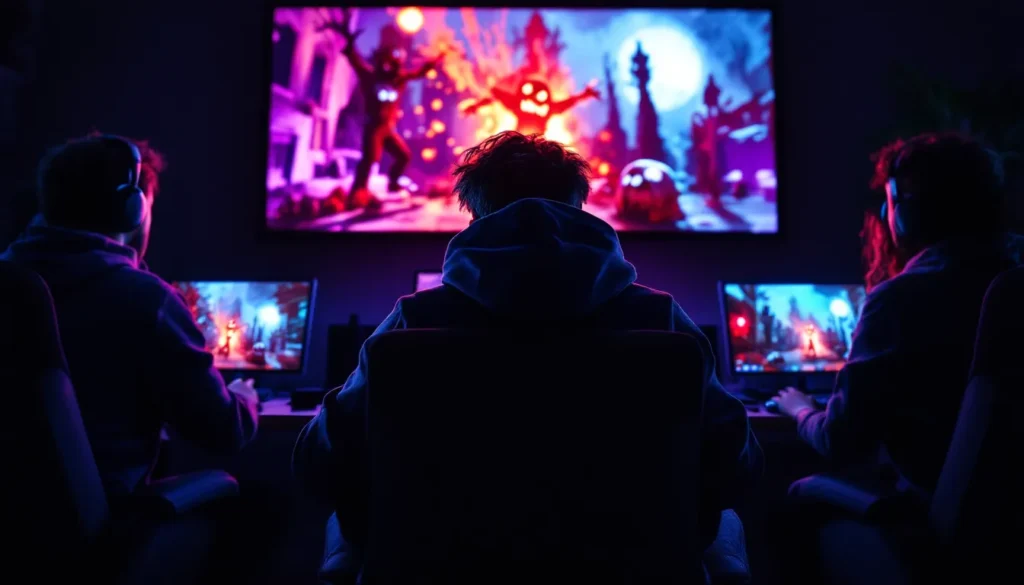
Lighting creates atmosphere. Playing in a dark room amplifies immersion exponentially. The contrast between your dark physical space and the game’s lighting makes scares more effective and reduces external distractions. If complete darkness isn’t practical, dim lighting works nearly as well.
Voice chat configuration is critical. Roblox’s built-in voice chat works but has limitations. For dedicated groups, using Discord or similar platforms provides better audio quality and reliability. The key is ensuring everyone can communicate clearly during tense moments, garbled audio or dropped connections kill immersion and often lead to in-game deaths.
Group size affects difficulty and experience. Most Roblox horror games support 2-8 players but are balanced around 4-6. Too few players make some games brutally difficult. Too many creates chaos where coordination breaks down and individual contributions feel diluted. For optimal experience, stick with 4-5 players for most titles.
Set expectations about playstyle. Some groups prefer pure survival attempts. Others enjoy roleplay elements or intentionally comedic runs. Establishing tone beforehand prevents mismatched expectations, the person treating it like Dark Souls won’t mesh well with friends doing horror-comedy bits.
About platform considerations, GamesRadar+ has noted that cross-platform play on Roblox works seamlessly, but mobile players often struggle with complex horror games requiring precise movement or quick reactions. If your group includes mobile players, choose games with less demanding controls.
Communication and Strategy for Group Play
Callouts save lives. Develop shorthand for common situations: “Entity left” is faster than “There’s a monster approaching from the left corridor.” In games like Doors or The Mimic, the seconds saved by efficient communication directly impact survival rates.
Assign roles when appropriate. For puzzle-focused games, having a designated navigator, item collector, and lookout streamlines progress. In survival games, designating a “leader” who makes split-second decisions prevents the deadly hesitation that comes from group indecision during high-pressure moments.
Learn together, don’t backseat. If one player has prior experience with a game, they should provide strategic advice without spoiling specific scares or puzzle solutions. The discovery process is half the fun, veterans should guide enough to prevent frustration without eliminating surprises.
Embrace failure as content. Horror game deaths, especially comedic ones, create the most memorable moments. Groups that get frustrated by losses miss the point, the experience is entertainment even when (especially when) things go wrong. Record especially chaotic sessions for later viewing.
Coordinate progression in story-driven games. For titles like Piggy with narrative continuity, playing chapters in order maximizes story comprehension. Jumping randomly between chapters works mechanically but diminishes the narrative experience the developers intended.
Take breaks between intense sessions. Back-to-back horror runs create diminishing returns as jump scares lose impact and tension fatigue sets in. Spacing out gameplay or alternating between horror and other genres maintains the emotional punch that makes horror games effective.
What Makes a Great Roblox Horror Game
Not all Roblox horror games are created equal. The platform’s accessibility means anyone can publish a horror experience, flooding the category with low-effort jump scare compilations and asset flips. Understanding what separates quality titles from shovelware helps identify games worth your time.
Consistent updates and developer engagement signal quality. Games that receive regular patches, bug fixes, and content additions indicate committed developers who view their project as more than a quick cash grab. Check the game description or social links for update logs and community interaction. Titles abandoned six months after launch rarely age well.
Original concepts or excellent execution of familiar ones. Innovation matters, 3008‘s infinite IKEA concept stands out precisely because nothing else does that. But execution can elevate familiar premises too. Doors doesn’t reinvent horror game structure, but its polish and refinement make it exceptional even though being “another escape game.”
Balanced difficulty that respects player skill. The best horror games teach mechanics through gameplay rather than lengthy tutorials, then challenge players to master those mechanics. Difficulty should come from intended challenge, not clunky controls, unclear objectives, or cheap deaths. Games where failure feels deserved rather than arbitrary keep groups engaged.
Audio design that does more than spam jump scares. Quality horror games use audio to build atmosphere, telegraph threats, and create spatial awareness. Constant loud noises and screaming sound effects are the mark of amateur design. Subtle audio cues, ambient soundscapes, and well-timed silence demonstrate sophisticated understanding of horror principles.
Replayability through procedural elements or meaningful choice. Games you play once and never touch again have limited value. The best Roblox horror titles include randomized elements, branching paths, or difficulty modes that encourage multiple playthroughs. Piggy‘s different modes, 3008‘s procedural generation, and Geisha‘s asymmetric role switching all provide reasons to return.
Community size indicates longevity but isn’t everything. Billion-visit games obviously have broad appeal, but smaller titles with dedicated communities can offer better experiences. Check player counts at different times, a game with 1,000 concurrent players at any given time has healthy engagement regardless of total visits. According to recent analysis from Pocket Tactics, community-driven horror experiences often outlast higher-profile titles due to consistent developer-player interaction.
Performance optimization matters. Horror atmosphere evaporates when games run at 15fps or have constant lag spikes. Quality developers optimize their games to run smoothly on lower-end hardware, recognizing Roblox’s diverse player base includes users without gaming PCs. Check comments and reviews for performance complaints before committing to lengthy sessions.
Fair monetization that doesn’t gate core content. Cosmetics, game passes for bonus features, and VIP servers are acceptable monetization. Games that lock chapters, essential abilities, or progression behind paywalls earn justified criticism. The best horror experiences are fully playable without spending Robux, with purchases offering convenience or cosmetics rather than competitive advantage.
Conclusion
Roblox’s horror ecosystem in 2026 offers something for every type of player, from hardcore survival enthusiasts to casual groups just looking for a few scares. The games covered here represent tested experiences that deliver genuine entertainment, whether you’re drawn to narrative depth, mechanical challenge, or pure atmospheric dread.
The beauty of this platform is its constant evolution. By the time Q3 2026 rolls around, several of these games will have major updates, new titles will have emerged from ambitious developers, and the meta around what defines “good” Roblox horror will have shifted again. That’s part of the appeal, there’s always something new to discover, some hidden gem sitting at 10 million visits that deserves ten times that.
For groups assembling their next horror session, start with the heavy hitters like Doors or The Mimic if you want proven quality and active communities. Branch into unique experiences like 3008 or Geisha once you’ve established what your group enjoys. And don’t sleep on the hidden gems, some of the most memorable sessions come from titles that haven’t hit mainstream popularity.
The platform’s accessibility removes almost every barrier between you and quality multiplayer horror. No $60 purchase, no high-end hardware requirements, no platform exclusivity. Just you, your friends, and more nightmare fuel than you could exhaust in months of gaming sessions. The only question is which horror you’ll face first.